Museum of Contemporary Art, Taipei
Tuesday Tuesday
10AM - 6PM
Tuesday Tuesday
10AM - 6PM
EXHIBITIONS & EVENTS
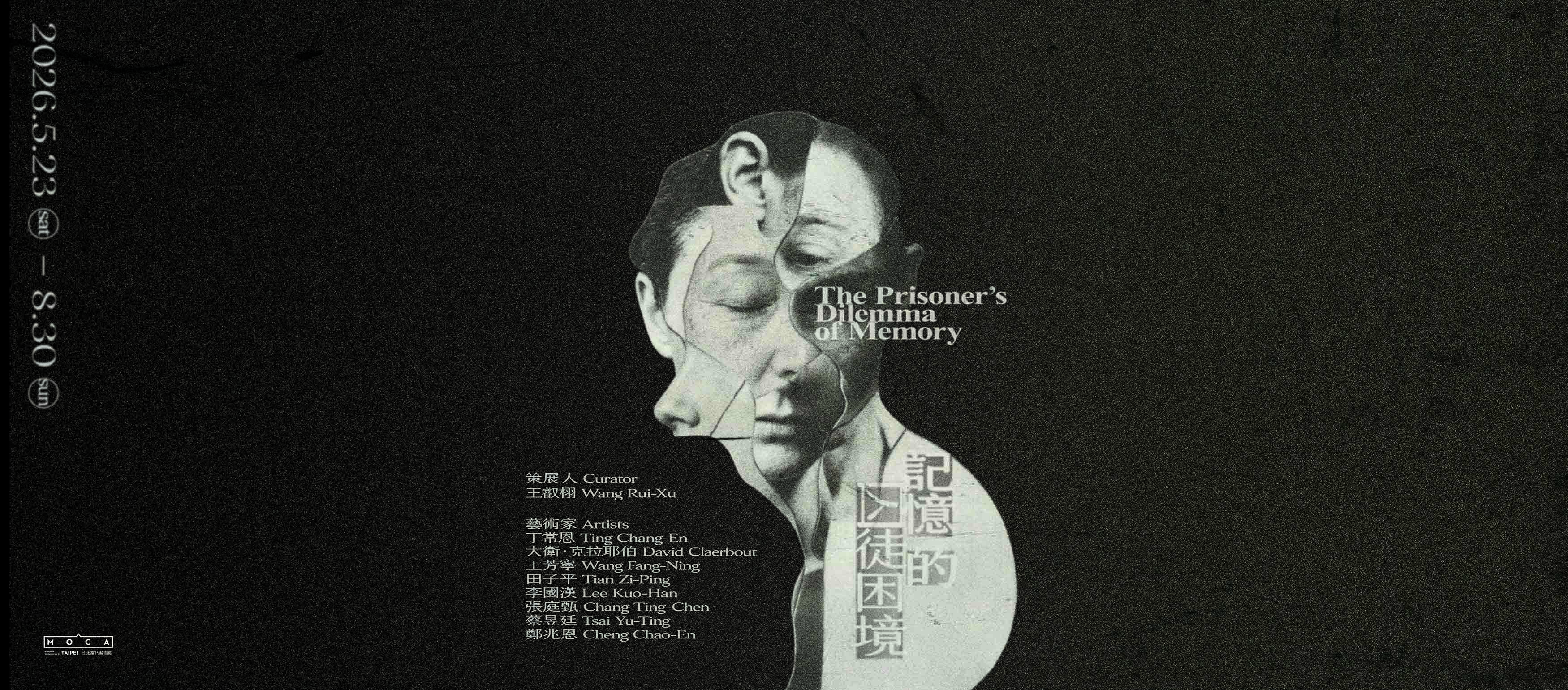
2026 / 05 / 23 Sat.
2026 / 08 / 30 Sun.
10:00 - 18:00
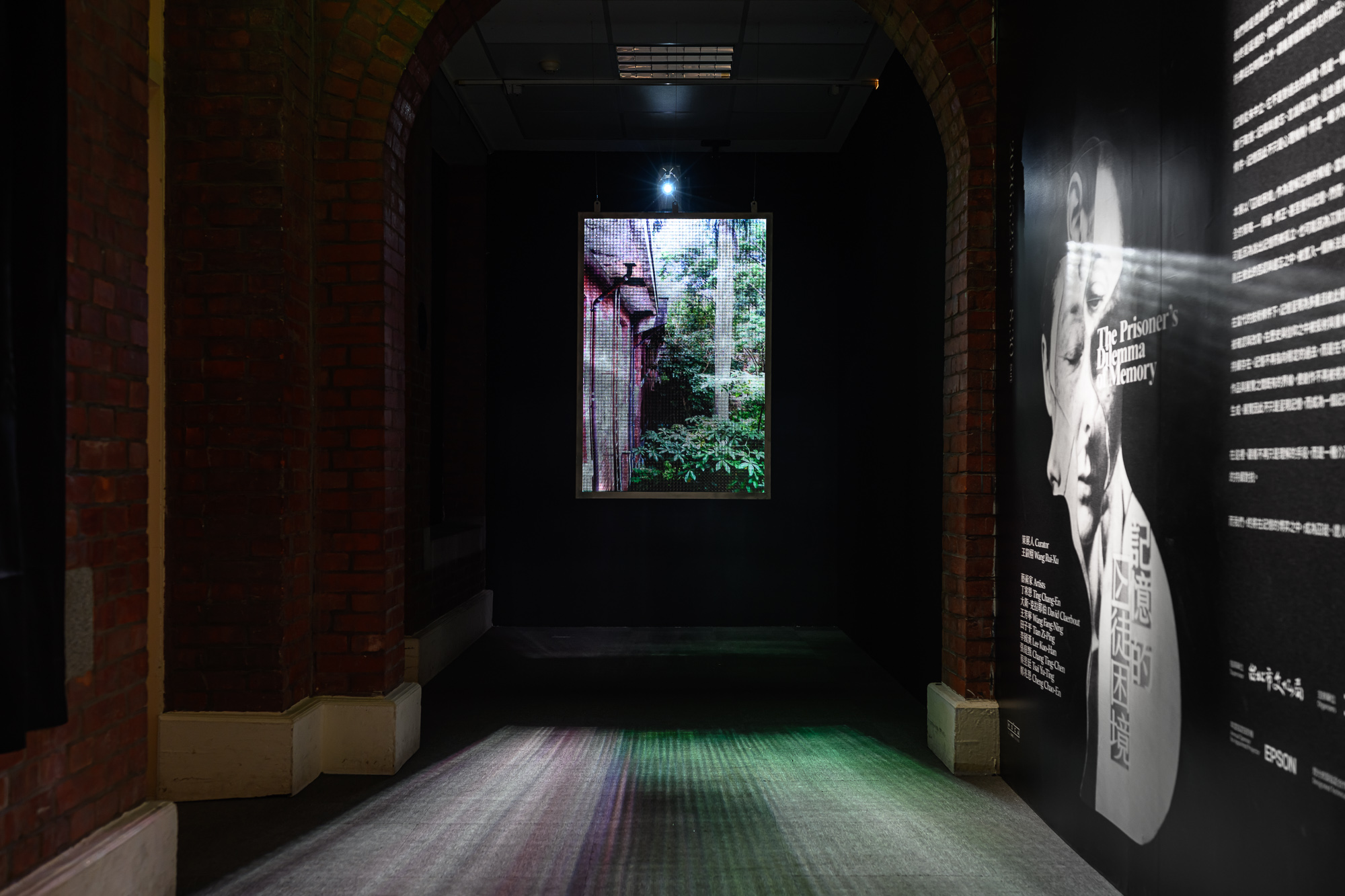
Curator
Wang Rui-Xu
Artists
Ting Chang-En
David Claerbout
Wang Fang-Ning
Tian Zi-Ping
Lee Kuo-Han
Chang Ting-Chen
Tsai Yu-Ting
Cheng Chao-En
Supervisor
Department of Cultural Affairs, Taipei City Government
Organizers
Taipei Culture Foundation
MoCA TAIPEI
Annual Sponsors
THERMOS
Contemporary Art Foundation
Hui-Neng Chi Arts and Culture Foundation
Annual Sponsor for Appointed TV/Screen
SONY
Annual Sponsor for Appointed Projector
EPSON
Accommodation sponsorship
Royal Inn
Media Cooperation
Radio Taiwan International
Designated Technical Lighting Partner
HISPOT WORKSHOP, INC
Special Thanks
Taipei Municipal Jian Cheng Junior High School
Esther Schipper
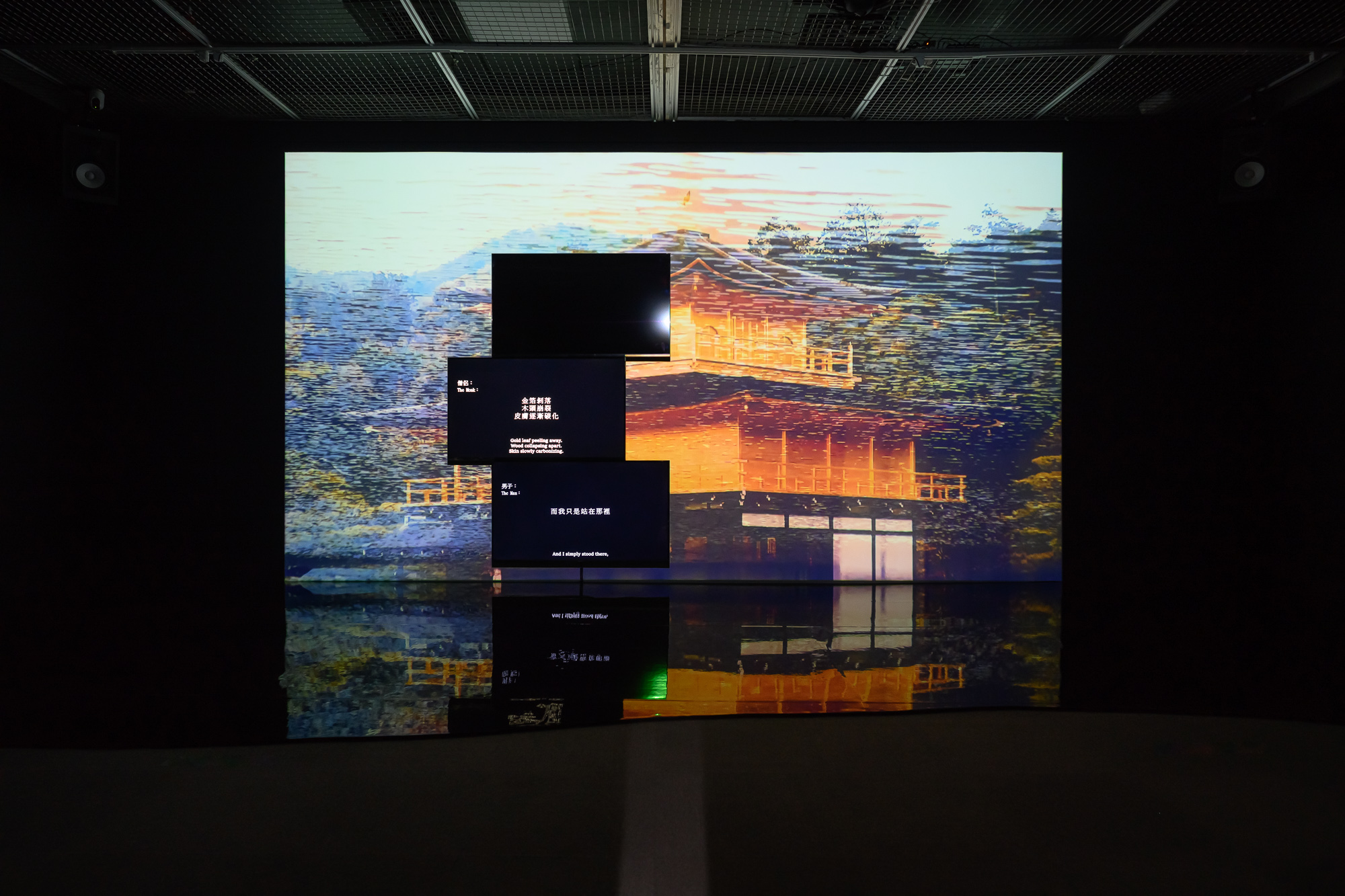
We never look directly at ourselves, just as we never stare straight at the sun.
We always see the person called “I” through shadows, reflections, others’ gazes, or fragmented memories. This perspective is always delayed, indirect, and meta-referential. Although we experience the world from a first-person perspective, we recall ourselves from a third-person point of view, as if we are outside time, observing a past version of ourselves.
Memory is never neutral. It is not merely a representation of the past but an ongoing process of selection and formation. Every time we look back, we are simultaneously choosing what to preserve and what to discard: remembering and forgetting, speaking and remaining silent. These choices not only shape an individual’s self-narrative but also constitute the conditions of our relationships with others. Thus, memory is more than just a psychological mechanism; it is a practice that involves ethics and power.
This exhibition uses the “Prisoner’s Dilemma” as a framework to explore how we understand memory. When individuals cannot be certain about others’ choices, they tend to choose the safest option—such as withholding, altering, or even suppressing memories.[y1.1] However, it is this self-protective tendency that gradually causes our collective reality to break down. We might be isolated for sharing our memories or become accomplices by remaining silent. As a result, memory becomes a strategic action, and in mutual denial and oblivion, we find ourselves caught in a game structure from which there is no escape.
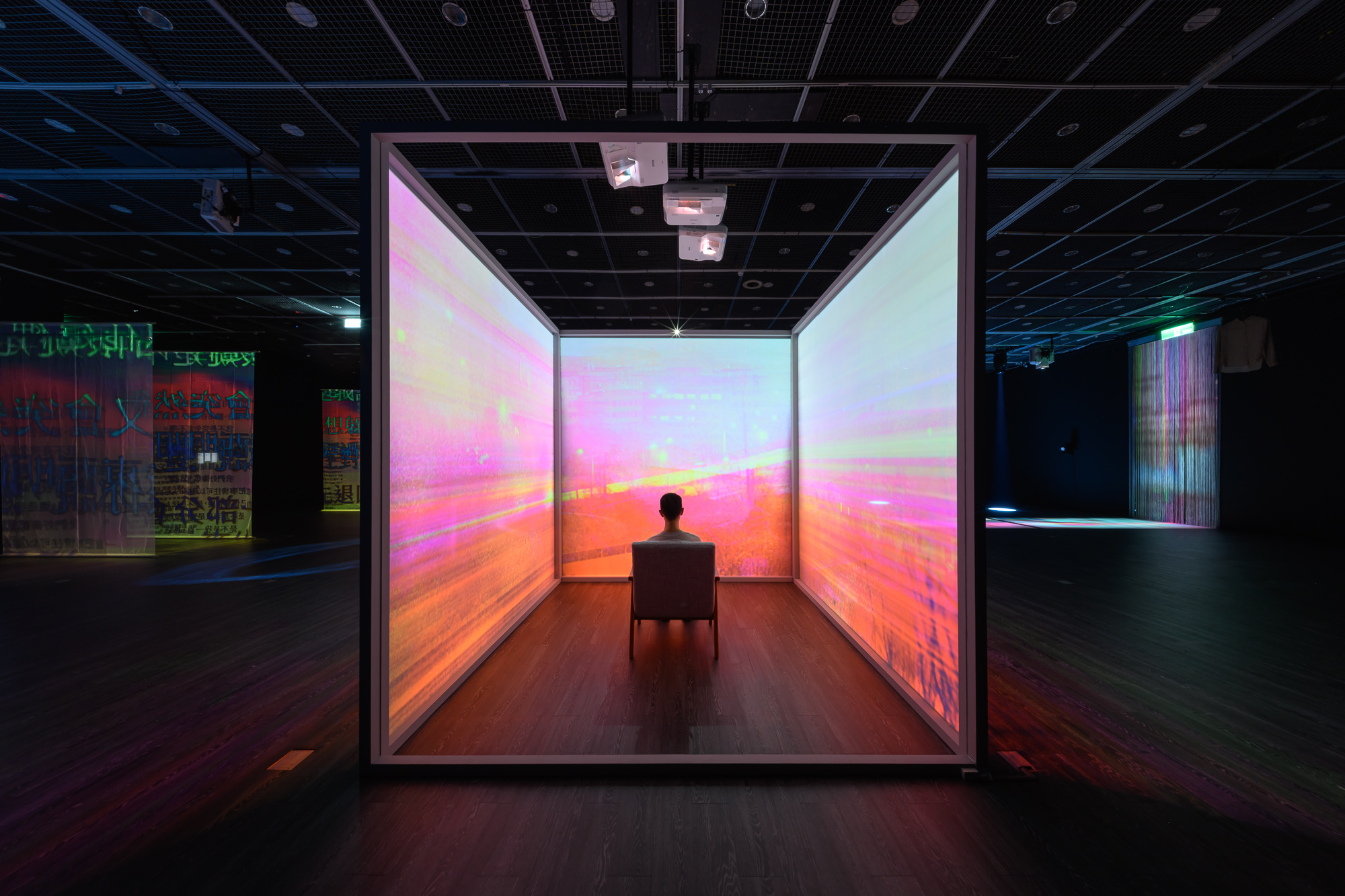
Under contemporary technological conditions, memory functions as multiple formative mechanisms that often conflict with one another. It can be supplemented within fragmentation, validated and shifted via media, projected and reconstructed through history and faith, or it may persist in forms that resist full expression within trauma and relationships. Memory no longer merely points to a fixed, stable past; instead, it is continually translated, displaced, or generated across different frameworks. This exhibition seeks to blur the boundaries between the artworks and the exhibition itself, highlighting that creation is a continuous process throughout the exhibition and amid evolving relationships, rather than a finished product. As a result, the exhibition not only showcases memory but also acts as a space where memory is actively constructed and transformed.
In this space, viewing is not just a means of gaining understanding but an act of intervening in memory; memory itself becomes more than mere recollection—it is an ongoing struggle against oblivion.
Ultimately, we become prisoners, witnesses, and participants with uncertain positions within the game of memory.
MORE
LESS
Wang Rui-Xu holds a Ph.D. in Department of Fine Arts from Taipei National University of the Arts and was previously a curator at the Kuandu Museum of Fine Arts. Her background includes political philosophy, international relations, cultural studies, and art criticism. She has long focused on virtual reality art, media, and perceptual modes, constructing theoretical frameworks that draw on the philosophy of technology and capitalism to explore how media reshape experiences of time and space. In recent years, she has introduced “divergence – grafting” as a perceptual mode to examine the viewing mechanisms and interpretive methods of contemporary art. Wang has curated The Third Gate-Virtual Suturing (National Taiwan Museum of Fine Arts), And It Came to Pass (Kuandu Museum of Fine Arts), and Sub-existence—Those We Aren't Always Aware of (TAO ART). She has also coordinated and overseen the production of Touches of Games—Francis Alÿs Solo Exhibition and Rustle of Existence by Shinji Ohmaki. She has planned and hosted the 2020 Kuandu Biennale—“Recoding in the Post-pandemic Era” lecture series, and her writings have been published in Ocula and ARTalks.
Ting Chang-En (b. 2000, Taipei, Taiwan) is an artist whose creative practice involves media, visual arts, and theater image, including video, image installations, and stage visuals. His work focuses on how images intersect with time and space, examining how viewing experience shifts through spatial arrangement and the relationship between spectator and performance. His recent works draw from the philosophy of technology to investigate the dialectical potential of poetic images and narrative within physical environments.
His exhibition experience includes Ars Electronica in Linz, Austria, the Kuandu Museum of Fine Arts, the TNUA Center for Art and Technology, the National Kaohsiung Center for the Arts–Weiwuying, the National Concert Hall, and the Taipei National University of the Arts (TNUA) Experimental Theatre. Ting earned his BFA from the Department of New Media Art at TNUA, and is currently pursuing an MFA in the same department with a minor in Visual Culture and Art History at the TNUA School of Fine Arts, continuing to explore the gaps in media art within visual contexts.
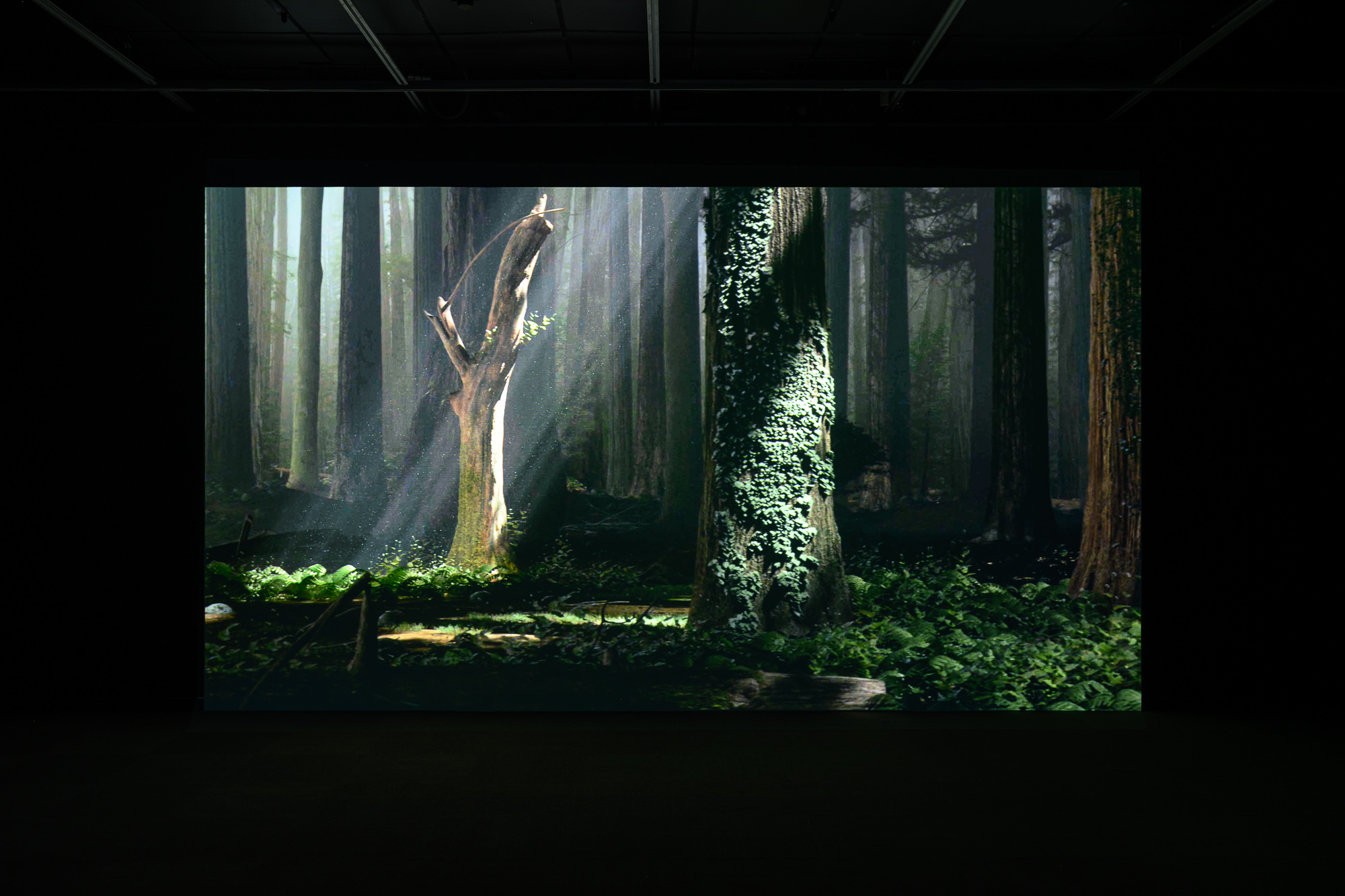
David Claerbout (b. 1969, Kortrijk, Belgium) lives and works in Antwerp and Berlin. His practice revolves around the concepts of temporality and duration, images suspended in a tension between stillness and movement, as well as the experience of dilated time and memory. He creates large-scale video-based installations that make the viewer part of the work—whether by establishing a connection between the projected image and the audience, by constructing a spatial relationship between the screen and the exhibition space, or by allowing a process in which “one scene can develop into another through the presence of the spectator and the passage of time” to unfold naturally. Claerbout describes his practice as “sculpting in duration. The definition of duration is different from that of time: duration is not an independent state like time, but an in-between state.” He was awarded the Will-Grohmann-Preis of the Berlin Akademie der Künste in 2007 and the Peill-Preis of the Günther-Peill-Stiftung in 2010, and participated in the DAAD Artists-in-Berlin Program (2002–2003). His work has been exhibited at major institutions including Centre Pompidou, San Francisco Museum of Modern Art, and Taipei Fine Arts Museum, and featured in major international exhibitions such as the Biennale of Sydney, Sharjah Biennial, and São Paulo Biennial. His works are held in major international collections including Centre Pompidou, The Museum of Modern Art (MoMA), the Solomon R. Guggenheim Museum, and the San Francisco Museum of Modern Art.
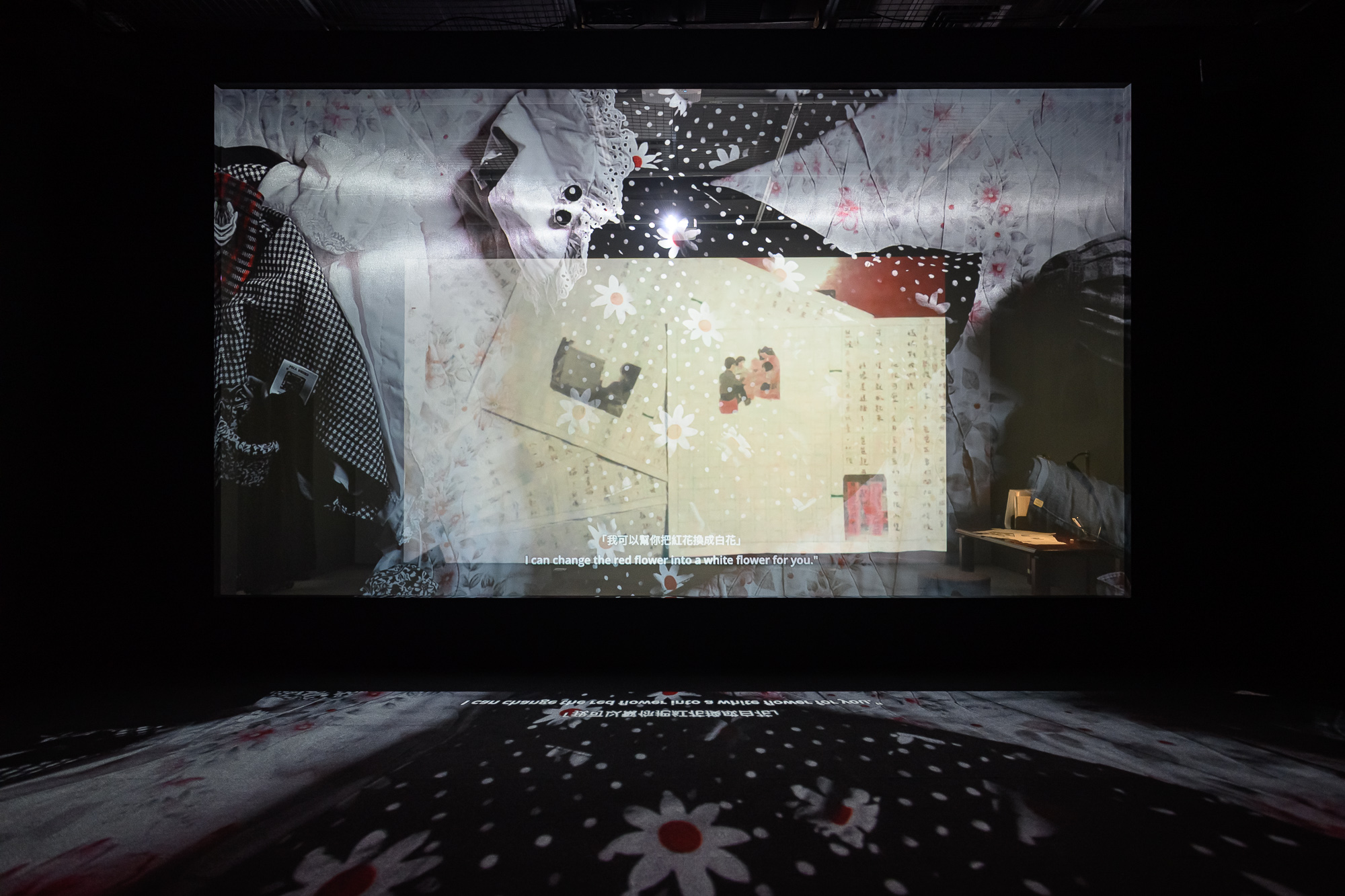
Chang Ting-Chen (b. 1995, Chiayi, Taiwan) received her MFA in Fine Arts (Mixed Media) from Taipei National University of the Arts in 2023. Her practice spans photography, video, image collage, found objects, and sculptural installation, focusing on the spatial and material extensions of the image. Often departing from personal experiences, family archives, and specific environments, Chang employs scanning, collage, and acts of viewing to treat images as materials subject to construction, disruption, and intervention. Through these operations, she develops strategies of narrative re-extension and reassembly. Her works have been exhibited in Taiwan, Greece, and Switzerland, including a solo exhibition at the Kuandu Museum of Fine Arts in 2025.
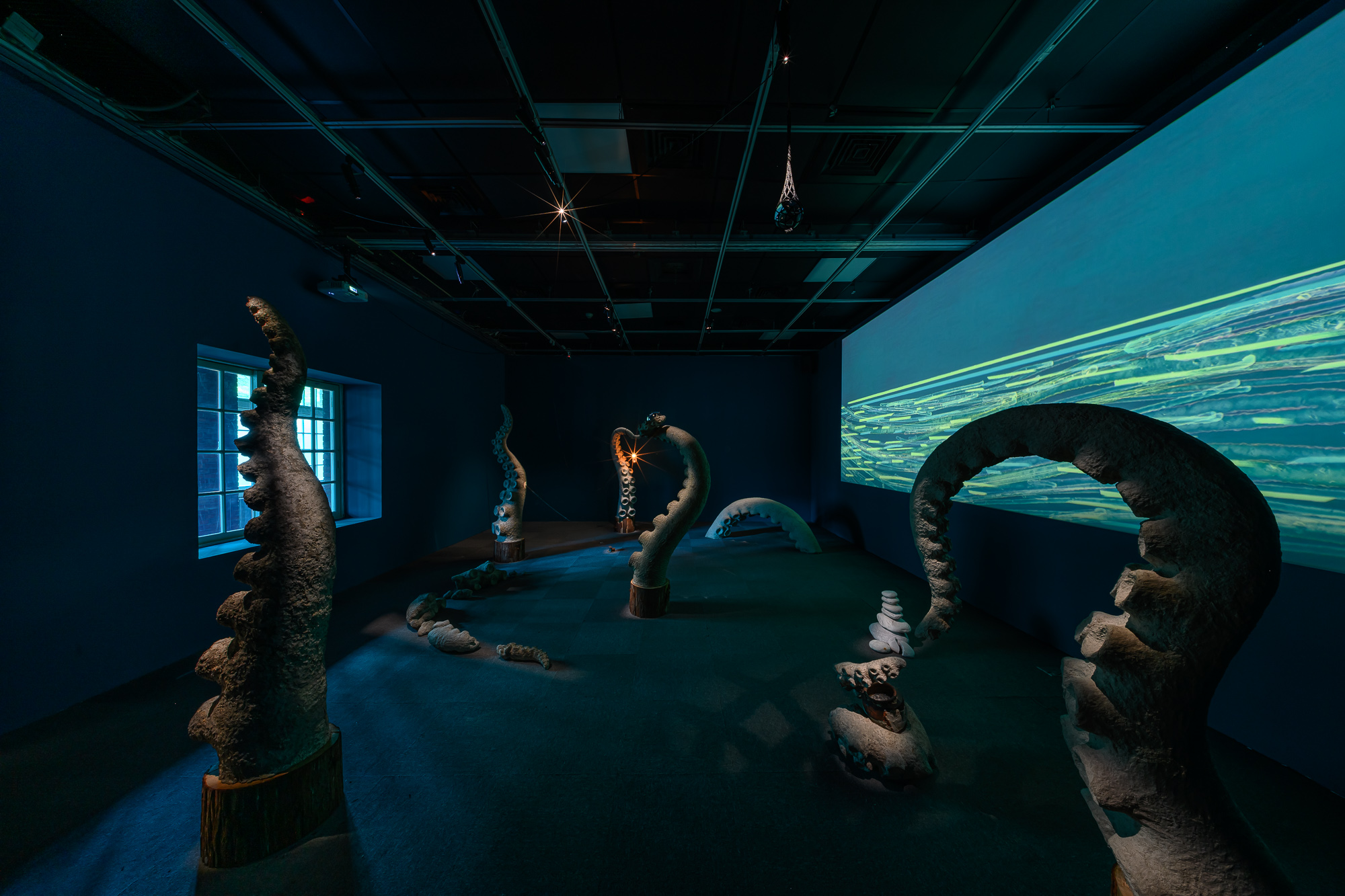
Tsai Yu-Ting (b.1999, Changhua, Taiwan) is an artist who lives and works in Taipei. He holds a bachelor’s degree in mechanical engineering and master’s degree in New Media Art from Taipei National University of the Arts (TNUA). His artistic vocabulary draws on diverse fields of knowledge, such as nature, technology, and history. Working across installation, video, and photography, his practice stems from life experiences and the exploration and identification of self, spirituality, place, and history. The individual is viewed from a topological perspective, and the ideas are generated by navigating through different systems and coordinates to interweave points of convergence.
Tsai’s recent solo exhibitions include Seeking for Absent Forms in Forests, Kuandu Museum of Fine Arts (2024); Ke-āu, Hong Foundation-Art (2025); Changhua County Art Museum (2025); and ALIEN Art Center. His works have also been presented in group shows including 2025 Taiwan Art Biennial—Black Water, National Taiwan Museum of Fine Arts; Festival PROYECTOR, Spain (2024); 2025 Ecos de Taiwán, Cuartel de Artillería, Spain; Annual Vertical Vision International Film Festival (VVIFF), USA (2024); Czong Institute for Contemporary Art, South Korea (2025); Ars Electronica Festival, Austria (2025); Taoyuan Art Center—TMOFA 2025 Taoyuan International Art Award, Taiwan; as well as in Thailand, France, and Lithuania.
Tian Zi-Ping (b. 1998, Taipei, Taiwan) focuses her practice on the spiritual connections between technological artifacts, digital belief systems, and humans. Using synesthesia as her method, she examines how the body and perception interact. Her work mainly takes the form of interdisciplinary exhibitions and performances, combining kinetic light installations, video installations, and new media dance theater. Moving between gallery spaces and theater settings, she creates narrative environments that bridge tangible materiality and sensory experience. Her achievements include the Ministry of Culture’s Taiwan and Australia Choreography Exchange Residence (2022-24), the First Prize in the Competition Category at the Taoyuan Technology Performing Arts Awards (2022), the National Taichung Theater’s “LAB X Young Artists’ Atelier” (2021), and the Outstanding New Media Art Award. (2019).
Lee Kuo-Han mainly works with video and projection, engaging in theater, installation, architecture, and body. His practice uses combinations and arrangements of heterogeneous materials, light, shadow, time, and visual signs to explore how image and space influence each other and the resulting perceptions, emotions, and meanings.
Lee has consistently collaborated across various performing arts disciplines, including theater, dance, and music, while contemplating the subjectivity of media in live performances and the balance between the performance itself and the media.
His works have been showcased at venues like the National Theater and Concert Hall, National Taichung Theater, and National Kaohsiung Center for the Arts–Weiwuying, as well as internationally in Macau, Denmark, and Austria. His works were selected for the “Multimedia and Projection Design” category at World Stage Design (WSD) for two consecutive editions, winning silver in Canada (2022) and gold in the United Arab Emirates (2025).
A light lover in pursuit of peace and freedom.
She graduated from the Department of Theatre Design at Taipei National University of the Arts and is skilled in narrative lighting aesthetics and visual language. She is drawn to light with the depth of storytelling. For her, light is not only a sign, but also a form of existence that transcends language and visual atmosphere, through which she seeks to render perception and experience visible while allowing them to remain in continual deferral.
Formerly known as Cheng Chao-En and now as Tse-Lun, the artist continues to work under the name Chao-En to preserve his professional recognition. He is currently a freelance artist specializing in theatrical music and sound design.
CLOSE
CLOSE
Copyright Notice
MOCA Taipei holds a high respect for the copyright of others, and it is stated in MOCA Taipei’s terms of service that any user of the museum’s service shall not infringe on others’ copyright. Therefore, MOCA Taipei hereby ask all our users to respect others’ copyright. If you think any of the content on MOCA Taipei’s website or anyone using MOCA Taipei’s service has infringed on your copyright, we strongly advice to you to file a complaint according to the regulations stated below, and MOCA Taipei customer service center will initiate related procedures as soon as possible.
If any of the content on MOCA Taipei’s website or anyone using MOCA Taipei’s service
has infringed on your copyright, please fill out the “Copyright Infringement
Notice,” provide the information and statements listed on the notice, and send them
to MOCA Taipei via fax.
1. Signature of the copyright owner or the signature of the proxy of the copyright
owner; document proving the ownership of the copyright and the copyrighted contents,
i.e. the cover and related pages of a publication, print-outs of webpage contents
and the URL.
2. The webpage and URL containing the contents that cause the copyright
infringement.
3. Your contact address and phone number.
4. A written statement stating that you believe the use of the webpage content is
without the consent of the copyright owner, the proxy of the copyright owner, or the
authorization of the law.
5. A written statement confirming that the information you state in the notice is
truthful and you hereby make the statement as the copyright owner or the proxy of
the copyright owner.
1. MOCA Taipei will remove the webpage content claimed to cause the copyright
infringement as soon as possible after receiving your notice, and will inform the
user about the infringement via email. If the said user objects to said
infringement, MOCA Taipei can provide your name, email or phone number to said user
so that direct communication can be achieved to resolve the dispute.
2. According to MOCA Taipei’s privacy policy and related regulations, MOCA Taipei is
only allowed to provide a user’s personally identifiable information to a third
party by the request of the law or a governmental agency unless said user agrees or
for the purpose of providing a service. Therefore, when you file a report, MOCA
Taipei will only remove the contents causing the copyright infringement, and will
not provide you any personally identifiable information of said user. If you wish to
obtain the user’s information, a legal proceeding must be filed at the District
Prosecutor’s Office or the Criminal Investigation Bureau, who will issue an official
letter to MOCA Taipei requesting the user’s information. In the case, MOCA Taipei
will comply accordingly.
Privacy and Data Protection Policy
MOCA Taipei values user’s privacy very much and has implemented the following privacy and data protection policy, which is listed below for your reference.
The privacy and data protection policy includes MOCA Taipei’s management of personal
identifiable information collected when providing users the website service as well as MOCA
Taipei’s management of any personal identifiable information shared between the museum and
our business partners.
The privacy and data protection policy is not applicable to any enterprise other than MOCA
Taipei, nor does it apply to those that are not staff or managements employed by MOCA
Taipei.
When you register a MOCA Taipei account, use MOCA Taipei’s products or services, browse MOCA
Taipei’s website, take part in related promotional activities or gifting programs, MOCA
Taipei will collect your personal identifiable information. MOCA Taipei is also allowed to
obtain said information from our business partners.
When you register a MOCA Taipei account, you will be asked to provide your name, email, date
of birth, sex, work title, field of profession and personal interests. Once your
registration is successful and the account is successfully logged into for the use of our
service, we will be able to recognize you.
MOCA Taipei also automatically receive and record the server data on your browser, including
IP address, the information in MOCA Taipei’s cookie and the record of visited webpages.
MOCA Taipei uses the information for the following purposes: to improve advertisement and
webpage contents provided for you, to complete your request for a certain product and to
notify you about a special event or new project.
MOCA Taipei will not sell or loan your personal identifiable information to anyone.
In the following circumstances, MOCA Taipei will provide your personal identifiable
information to a governmental agency, an individual or a company.
To obtain your consent before sharing the information with other individuals or companies.
To provide a requested product or service, which requires sharing your information with
other individuals or companies.
To provide a requested product or service, which requires providing the information to
companies providing the product or service on behalf of MOCA Taipei. (Without our notice in
advance, these companies will not have the right to use the personal information we provided
for purposes other than provide a product or service.
To abide the law or the request of a governmental agency.
When an action on the website violates MOCA Taipei’s terms of service or the specific user’s
guidelines of a product or service.
Other information required to be disclosed by the Computer-Processed Personal Data
Protection Law or other regulations.
To protect user’s privacy and personal data, MOCA Taipei is not allowed to look up other
user’s account information for you. Should you need to look up someone else’s information
due to legal issues, please contact the police to file a legal proceeding. MOCA Taipei will
fully cooperate with the police to provide necessary information to assist with the
investigation and solve the case.
MOCA Taipei will access your computer setup to extract MOCA Taipei’s cookie.
MOCA Taipei allows the companies that place advertisements on the museum website to access
your computer setup and extract cookies. Other companies will follow their own privacy and
data protection policies to use cookies instead of MOCA Taipei’s policy. Other advertisers
or companies are not allowed to extract MOCA Taipei’s cookie.
When MOCA Taipei conducts tasks related to our products and services, web beacons are used
to access our website network to use cookies.
MOCA Taipei’s users have the right to revise their personal MOCA Taipei account information
and set up personal preferences anytime, including the option as to whether you would like
to receive notifications about special events or new products.
Based on the Computer-Processed Personal Data Protection Law, when the purpose of using your
personal information expires, MOCA Taipei will provide the service to delete your account
and data. However, to do so, please contact us via telephone.
MOCA Taipei adopts a method that conforms to the Computer-Processed Personal Data Protection
Law to protect your personal information.
To protect your privacy and safety, the data in your MOCA Taipei account will be
password-protected.
Under some circumstances, MOCA Taipei uses the standard SSL security system to ensure the
safety of data transmission.
MOCA Taipei has the right to revise our policies at any time necessary. When the regulations
regarding using personal information are extensively revised, public announcements will be
made on our website to inform you about the revisions.
Please tell us your ideas and suggestions here.