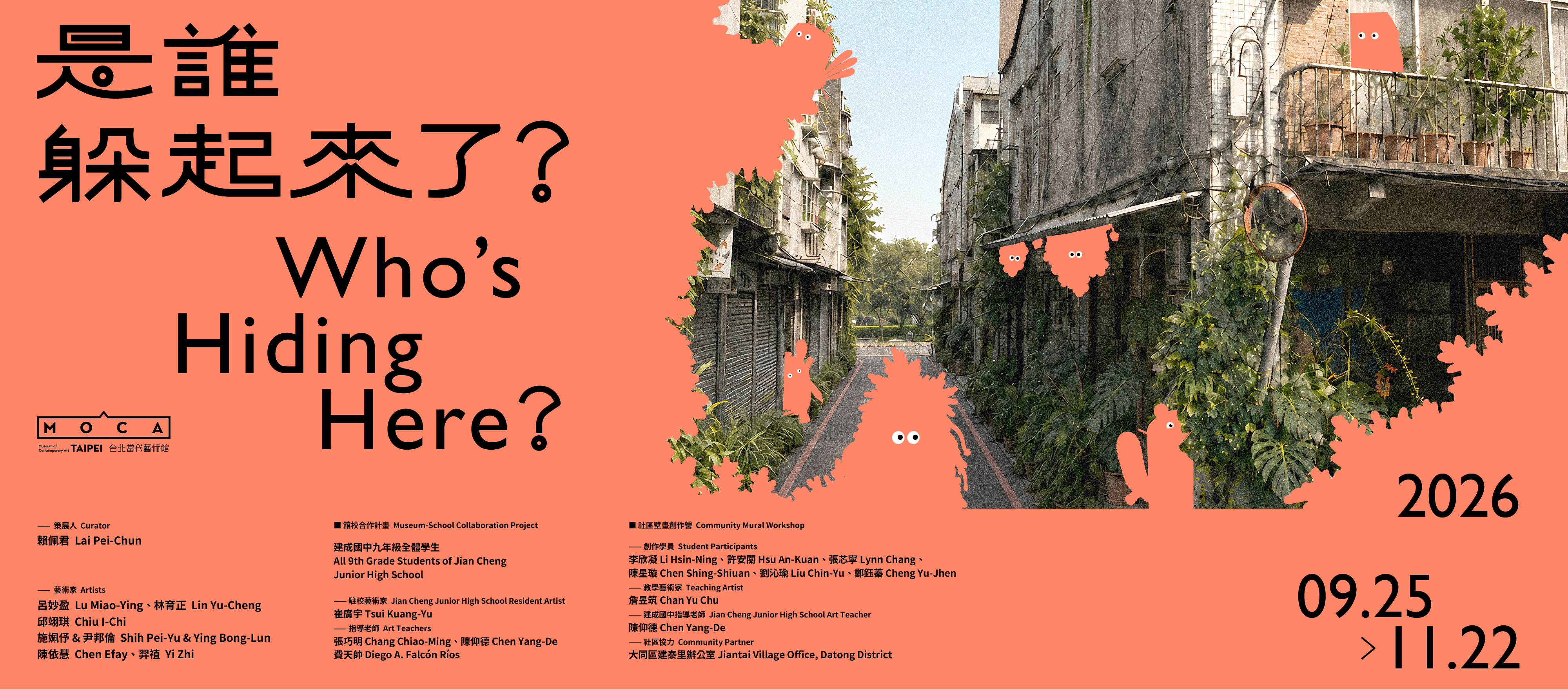
Who's Hiding Here?

Community Art Project

2026 / 09 / 25 Fri.

2026 / 11 / 22 Sun.

  • Curator

    Lai Pei-Chun

  • Artists

    Lu Miao-Ying
    Lin Yu-Cheng
    Chiu I-Chi
    Shih Pei-Yu & Ying Bong-Lun
    Yi Zhi
    Chen EFay

  • Museum and School Collaboration Project

    All 9th Grade Students of Jian Cheng Junior High School
    Jian Cheng Junior High School Resident Artist|Tsui Kuang-Yu
    Art Teachers|Chang Chiao-Ming, Chen Yang-De, Diego A. Falcón Ríos

  • Community Mural Workshop

    Student Participants│Li Hsin-Ning, Hsu An-Kuan, Lynn Chang, Chen Shing-Shiuan, Liu Chin-Yu, Cheng Yu-Jhen
    Teaching Artist│Chan Yu Chu
    Jian Cheng Junior High School Art Teacher|Chen Yang-De
    Community Partner|Jiantai Village Office, Datong District

  • Supervisor

    Department of Cultural Affairs, Taipei City Government

  • Organizers

    Taipei Culture Foundation
    MoCA TAIPEI

  • Annual Sponsors

    Contemporary Art Foundation
    Hui-Neng Chi Arts and Culture Foundation
    Royal Inn

  • Annual Sponsor for Appointed TV/Screen

    SONY

  • Cooperation

    Taipei Municipal Jian Cheng Junior High School
    Taipei Rapid Transit Corporation
    Shin Kong Mitsukoshi Taipei Nanxi Store
    Royal Inn Taipei Nanxi, Royal Inn Taipei Linsen
    Dandelion Hope Foundation
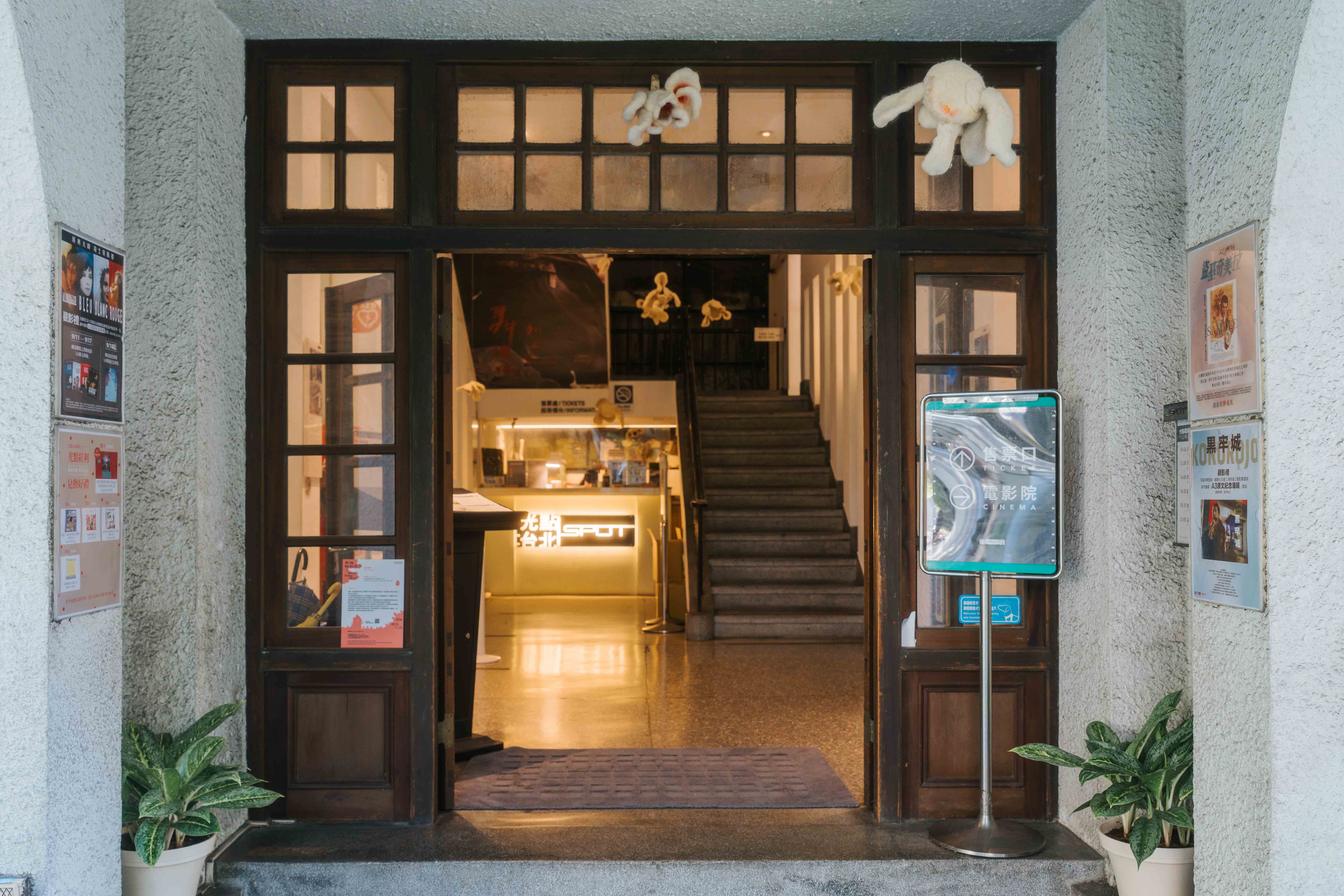
    Taipei Film House / SPOT-Taipei
    KIMOTSI Bookstore
    Illumination Books
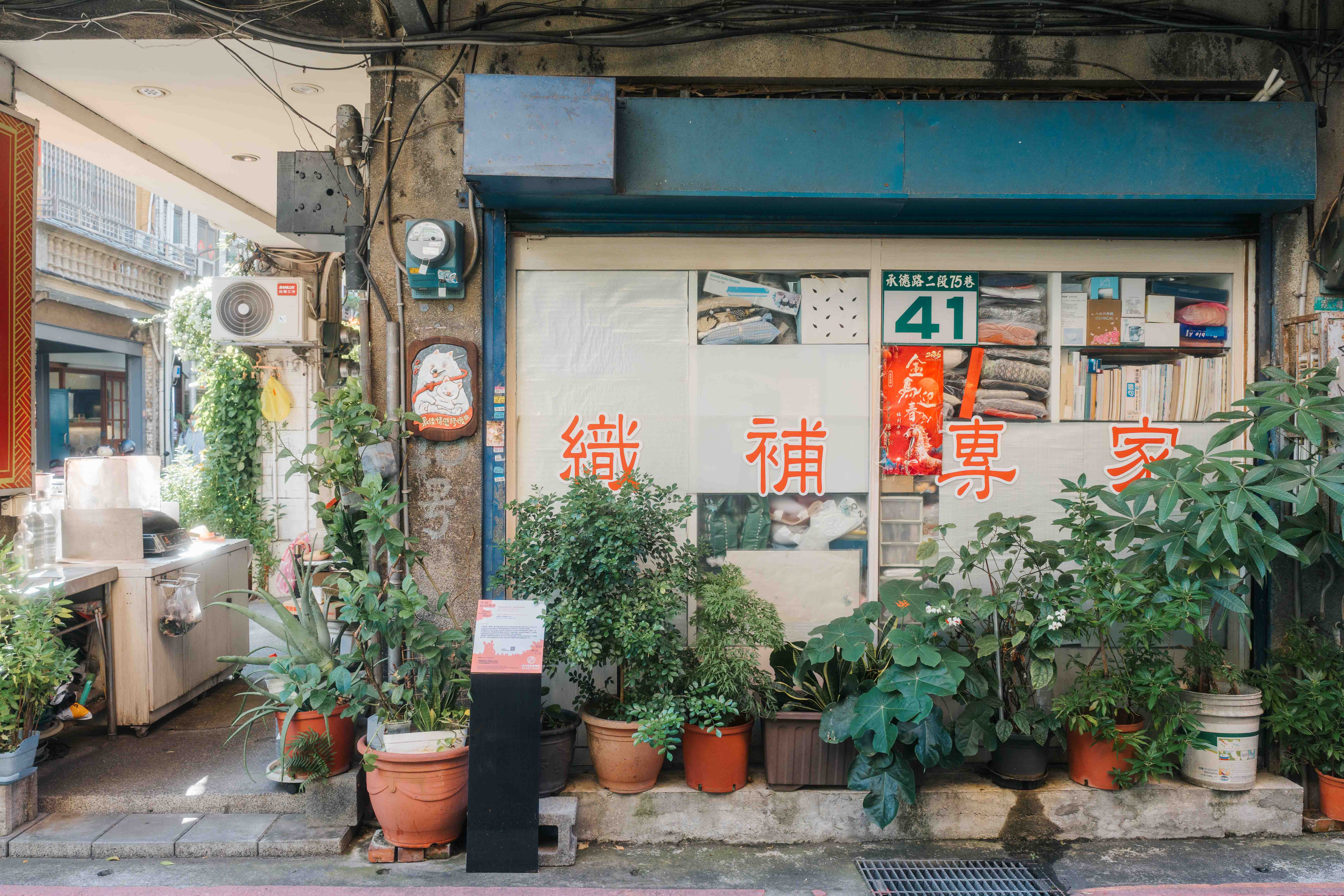
    Textile Repair Studio
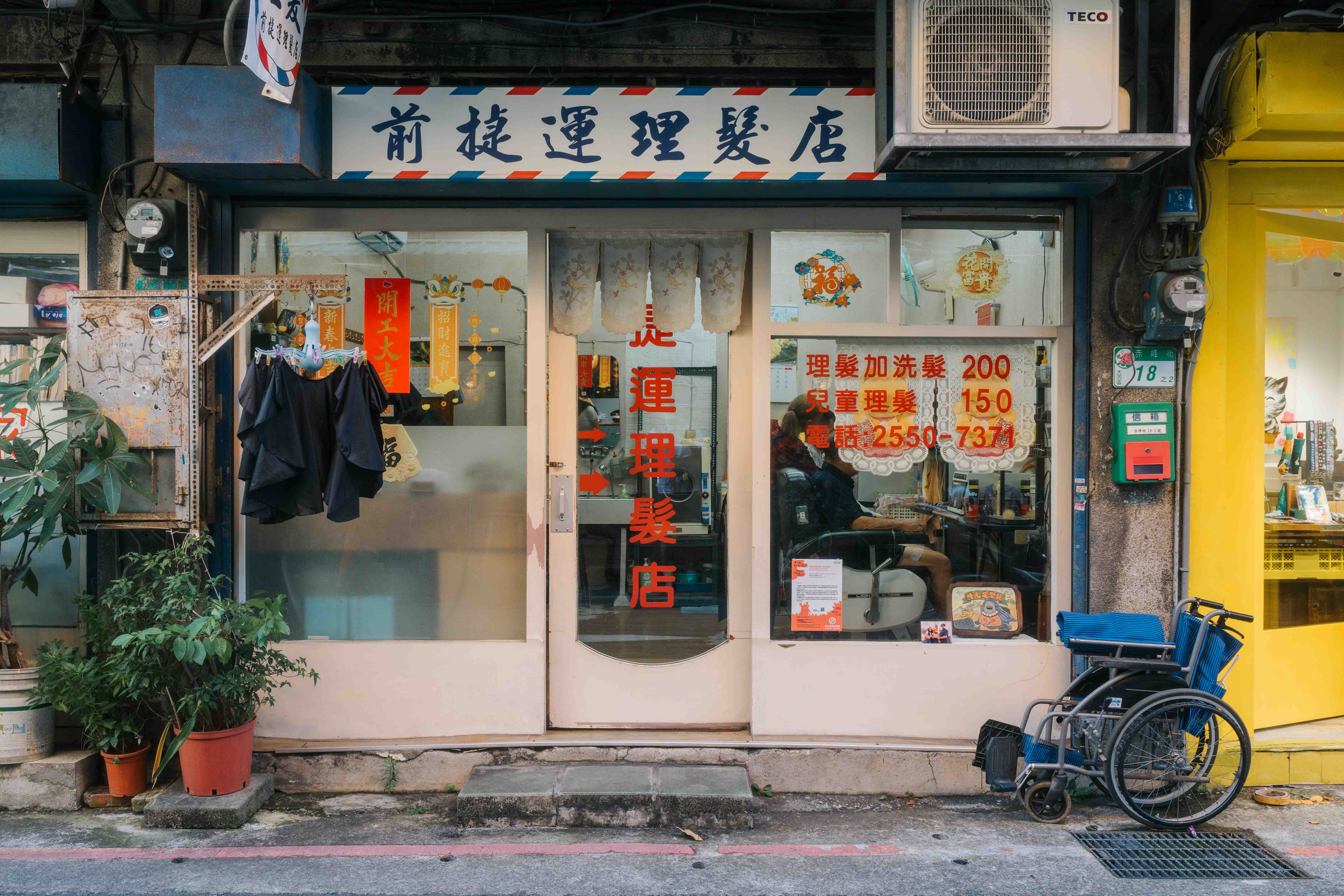
    Former MRT Barbershop
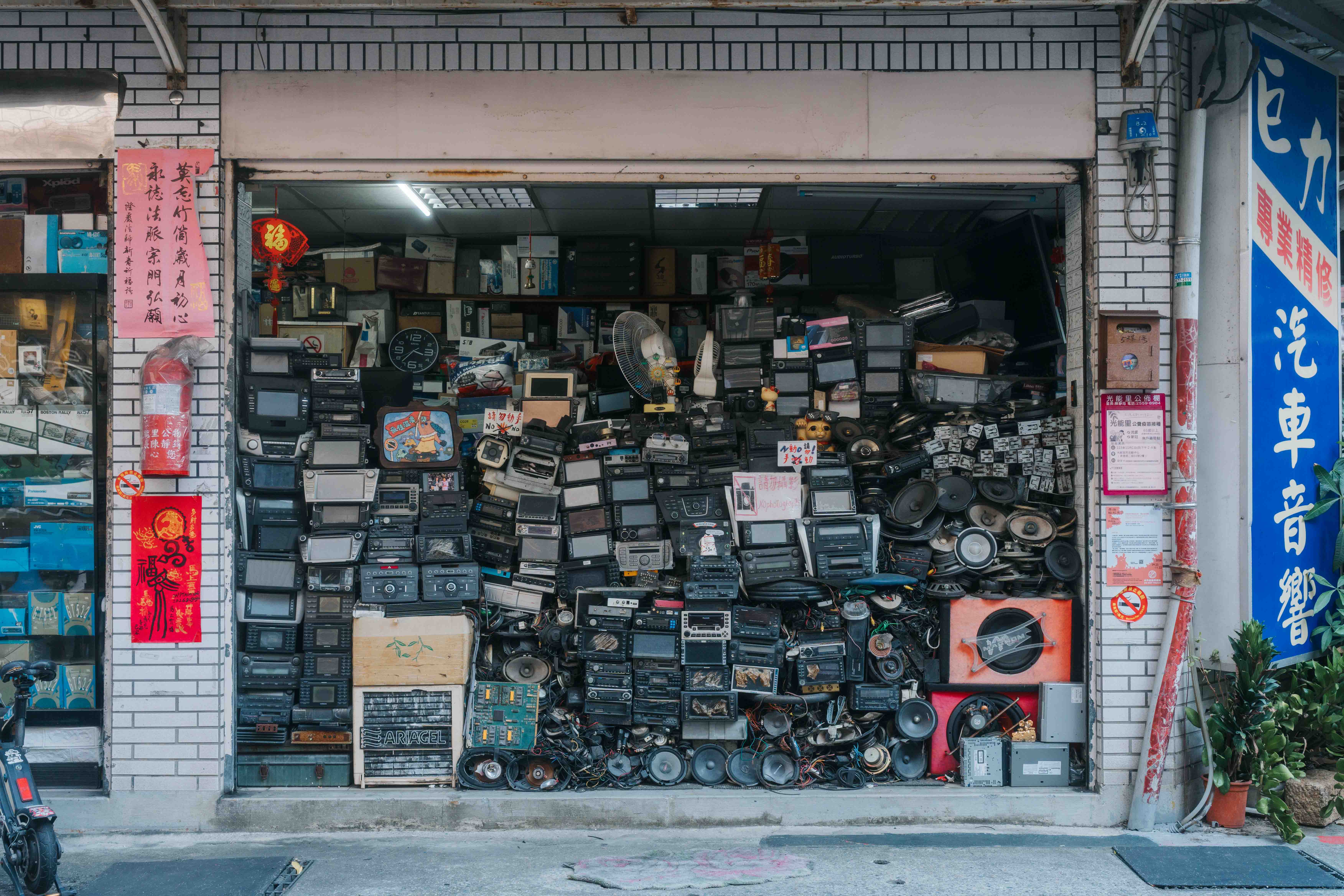
    Juli Car Audio
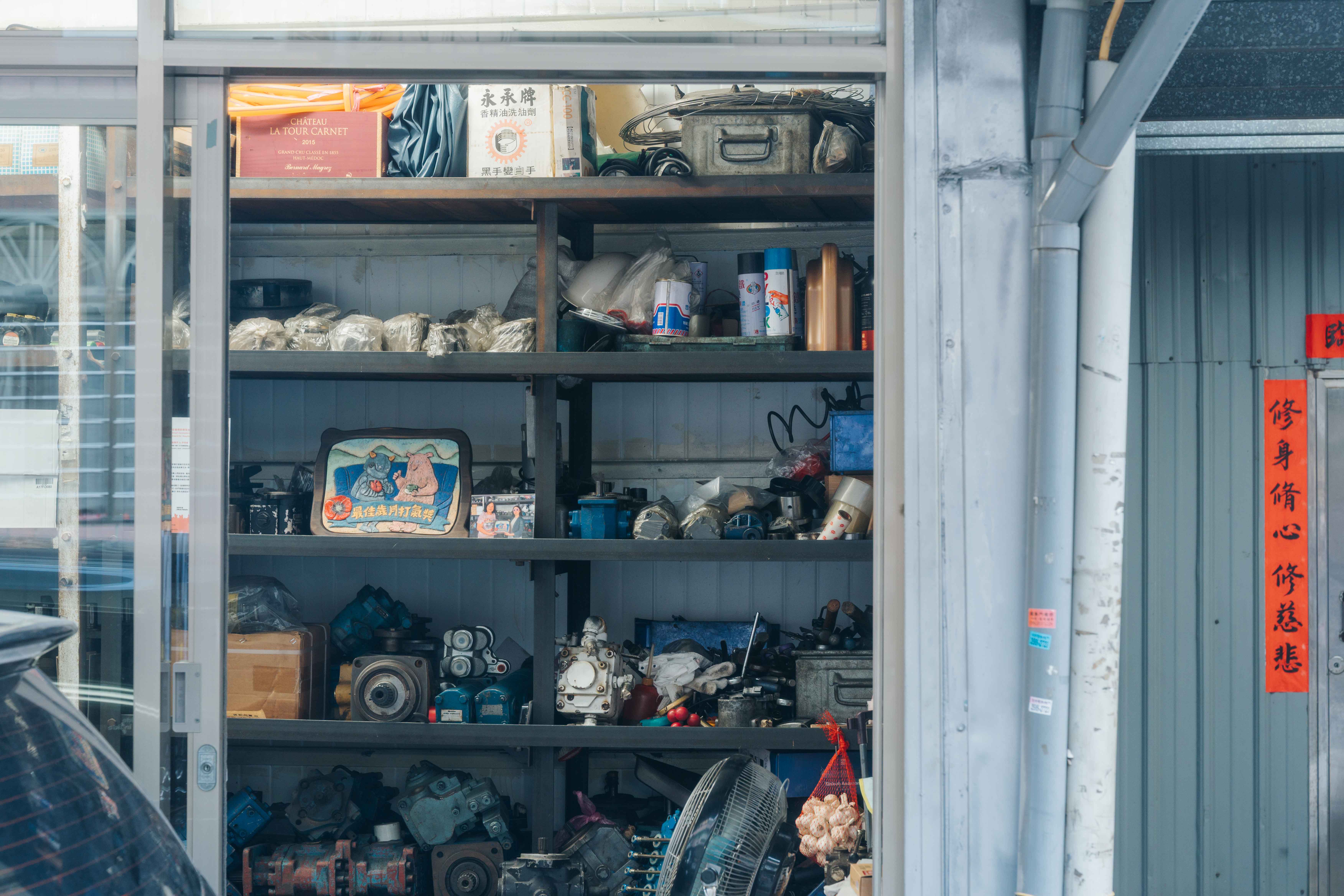
    Qihuang Hydraulic Hardware

  • Media Cooperation

    Radio Taiwan International

  • Special Thanks

    Guangneng Village Office
    Chientai Village Office
    Jianming Village Office
    Minan Village Office

Exhibition Introduction

Plants peek out from cracks in walls, insects dart through the shadows, and animals leave traces of passage almost too faint to notice. In the city we know so well, how many living beings quietly share these spaces with us? Hidden in corners, flowerpots, beneath eaves, or between gaps in the pavement, these plants and animals coexist with the city on their own terms. Though their presence may seem insignificant, they form part of the intricate and intimate relationships that connect us to our environment.

MoCA TAIPEI’s Community Art Project focuses on the signs of life concealed within the alleyways, parks, and drainage ditches of Zhongshan District. Through close observation and spatial intervention, artists have been invited to create works and site-specific installations within neighborhood spaces, so that together we might come to know the city’s ecological diversity anew and look again at the small lives that often go unnoticed in our everyday lives.

Building on the playful premise of hide-and-seek, Who’s Hiding Here? invites visitors to discover traces of life quietly hidden traces of life within familiar surroundings. It also encourages visitors to walk and feel this concrete world through the eyes of these creatures, thereby rebuilding a perceptual connection with habitat, environment, and other living beings.

MORE

LESS

Curator Biography

Lai Pei-Chun

Lai Pei-Chun is an independent curator based in Taoyuan. She approaches curatorial practice through field research, the translation of local knowledge, art education, and audience experience design, with a sustained interest in Taiwanese history, local life, urban memory, and the forms contemporary art takes when staged in public space. She considers the exhibition a medium for research, storytelling, and public communication, paying particular attention to the relationships of translation among artworks, sites, audiences, and knowledge. Through her practice, she continues to explore how art can reshape how people understand place, history, and everyday life.

She has curated numerous exhibitions and public programs focused on Taoyuan’s history, community cultures, and local landscapes. Her international exchange experience includes projects in Japan and South Korea, where she has showcased the work of Taiwanese artists through exhibitions and fostered ongoing dialogue with the global art scene.

Artist Biography

Lu Miao-Ying
Lin Yu-Cheng
Chiu I-Chi
Shih Pei-Yu & Ying Bong-Lun
Yi Zhi
Chen EFay

Lu Miao-Ying was born in Taiwan, and she graduated from the Graduate Institute of Transdisciplinary Arts at the Taipei National University of the Arts. Working across video, installation, sculpture, and writing, her practice explores plant and animal narratives, ecological entanglements, and more-than-human relations. Drawing from specific sites and local histories, she combines field research, moving-image documentation, and poetic storytelling to investigate how labor, ecology, and environmental memory shape forms of coexistence across species.

Her recent works have been exhibited at the Kaohsiung Museum of Fine Arts, Digital Art Center Taipei (DAC), and Taipei Artist Village. Her video works have also been screened and exhibited at festivals and exhibitions in Thailand, the United Kingdom, Portugal, Italy, Spain, and Lithuania.

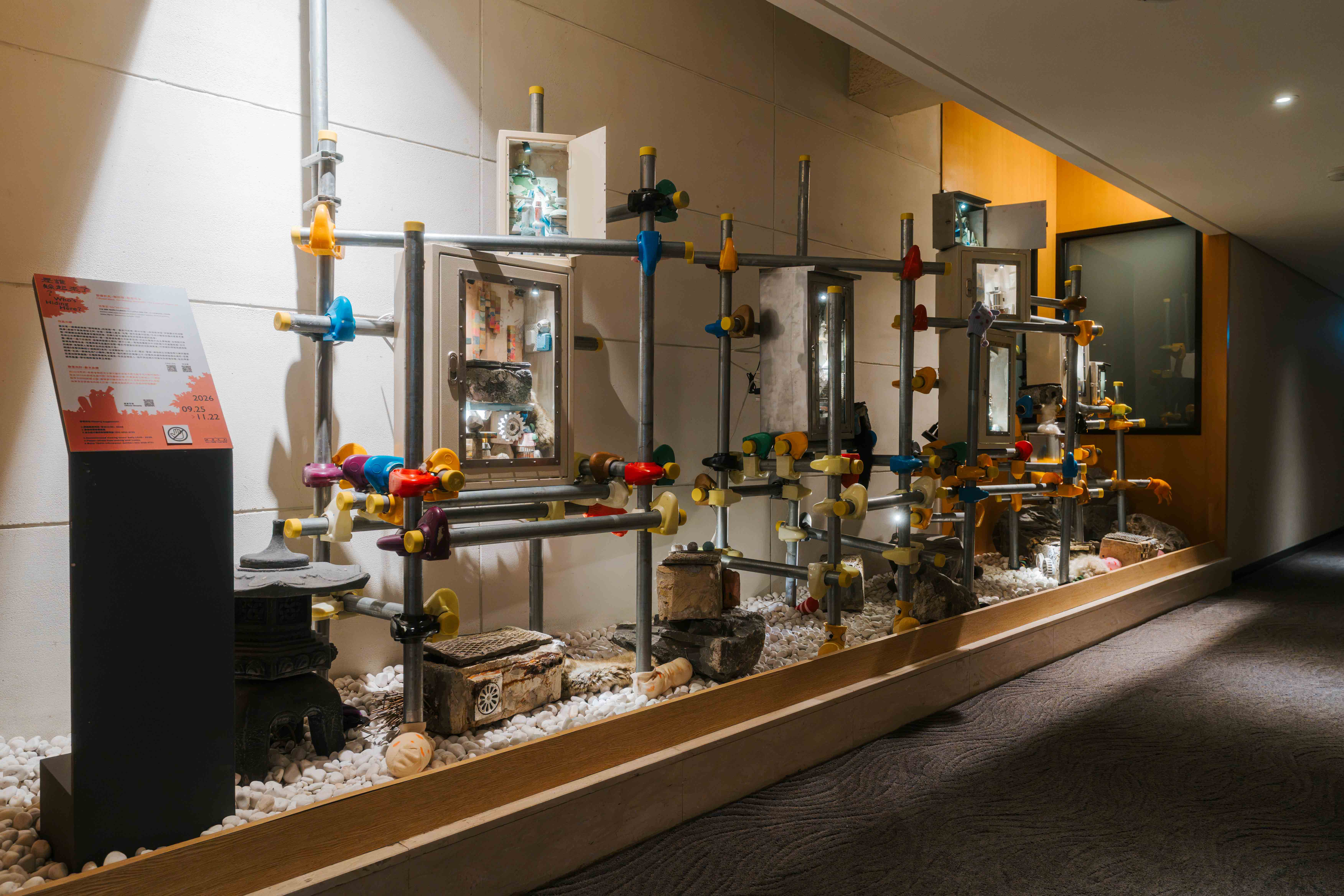
Lin Yu-Cheng was born in Taipei, Taiwan, in 1979. He graduated from the Department of Sculpture at National Taiwan University of Arts. His practice reflects on questions of spatial identity within the contemporary city. In addition to his exploration of sculpture and kinetic art, his work also extends across new media, theatre, and public art.

Prior to 2011, his work focused on creating seemingly purposeless metal machines, using archaeological-like excavations within architectural spaces as a creative approach. Through this process, he sought to highlight the horizontal and vertical structures of architecture while drawing attention to the overlooked corners of buildings.

Starting in 2011, a new creative direction emerged under the overarching framework of A Collecting Project About Cities, Debris, and Wanderings. This body of work combines everyday objects with industrial materials, stripping them of their original functions before reconstructing them. Beginning with observation, collection, symbolization, modular manipulation, replication, reconstruction, and imitation, the works continuously test and challenge habitual ways of seeing, revealing the tension between abstract concepts and concrete emotions.

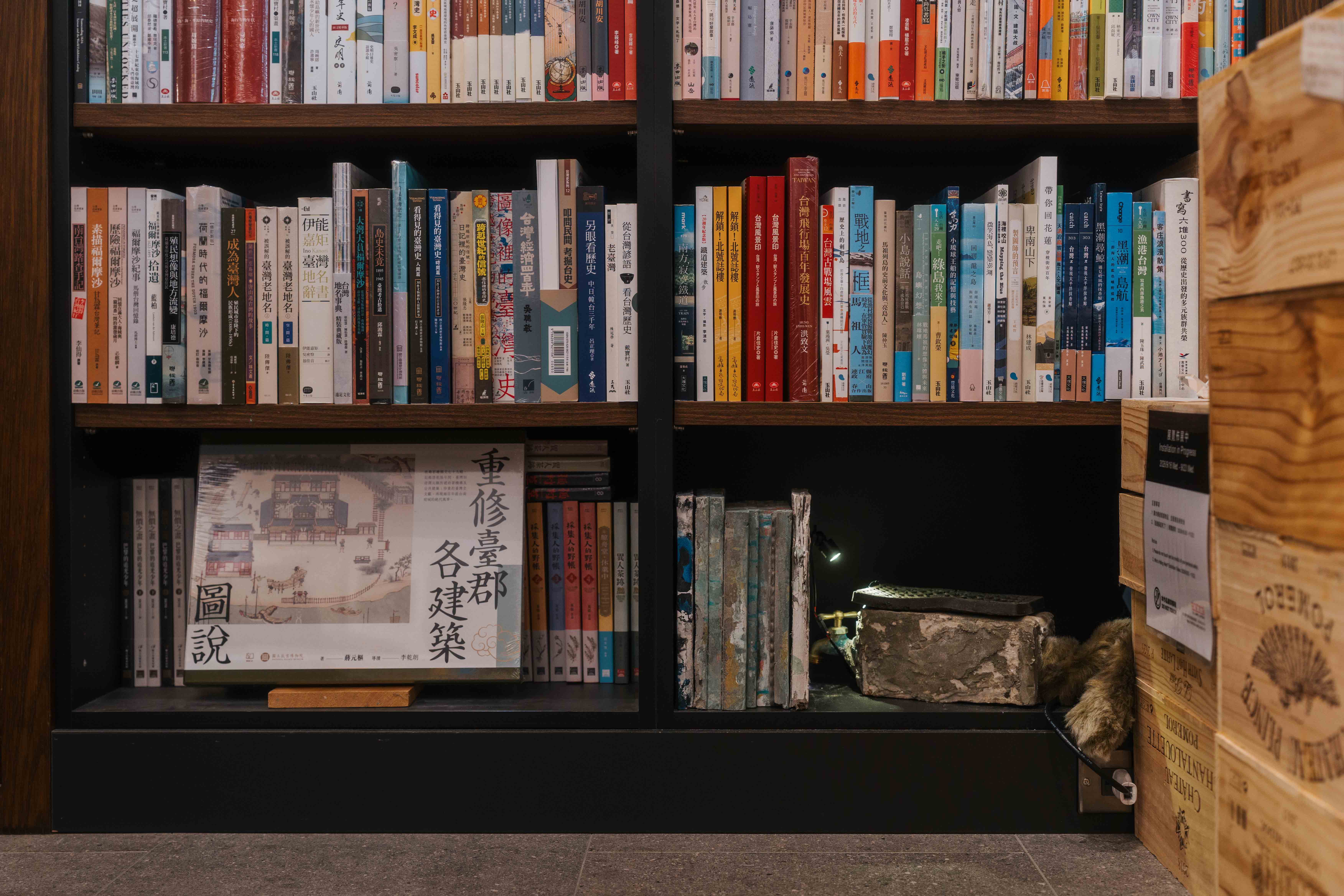
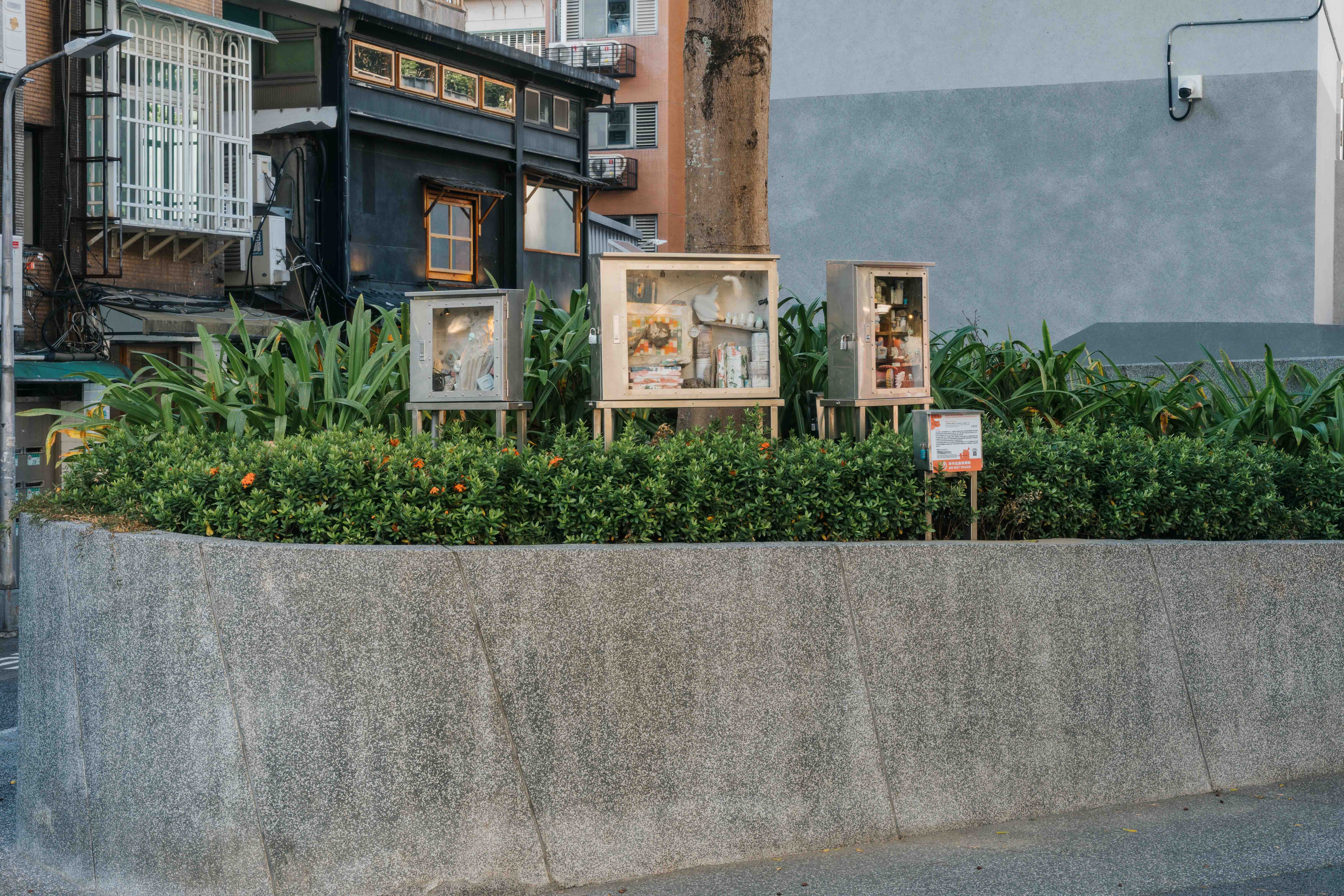
Since 2021, the emergence of his box-object compositions has marked another new phase in his practice. These works present assemblages of objects inside and outside the boxes, incorporating self-made fragments and collected miscellaneous items accumulated over more than a decade. Each installation is assembled on site—from the construction of scaffolding to the selection of objects—demonstrating a kind of self-rehearsing modular system.

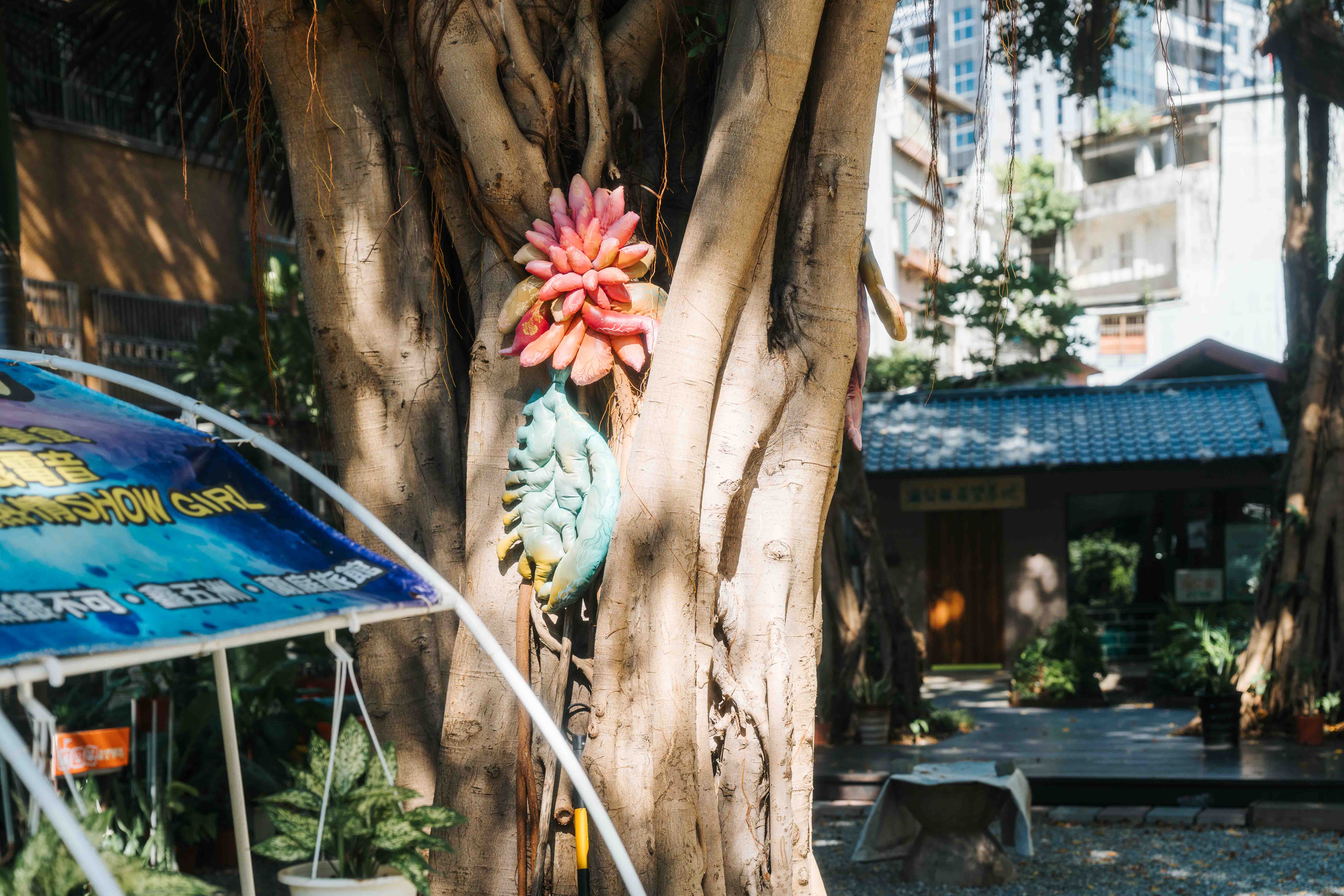
Born in Taoyuan in 1995, Chiu I-Chi currently lives in Zhongli. Working across painting, embroidery, soft sculpture, and installation, she has long centered her narratives on fictional creatures to explore the relationships among the body, nature, and trauma. Drawing on personal experiences of illness, caregiving, surgery, and recovery, Chiu observes the body in states of injury, healing, deformation, and decay. She transforms these sensations into life forms that hover between the human body, plants, organs, and wounds. Her recent work also draws on urban trees, roadkill, museum specimens, and her family’s culture of body piercing. Through pliant materials, fine handwork, and vivid color, she builds biological landscapes in which reality and fantasy are interwoven. Her work invites viewers to look again at scars, vulnerability, and regeneration, and to feel the resilience of life persisting through ceaseless change.

Shih Pei-Yu works primarily in three-dimensional ceramics, telling stories about the things and feelings she encounters in daily life and rendering them in a childlike, playful style. Ying Bong-Lun, who combines ceramics with woodcraft, works in a more measured register, with a gift for turning tangled trains of thought into forms that can be grasped at a glance. Together the two founded “So We Create Studio” in Taoyuan, where their imaginative, abstract work invites every viewer to go back to basics and recover the simplest version of themselves.

Yi Zhi writes: “I hope to remain as focused in literary creation as an arrow striking the bullseye, while also embracing the freedom of being held by the air in flight.” Her given name is Chan Yu Chu, and she came to writing from art illustration, animated film production, and visual design. Her first approach to literature grew out of admiration for those with a gift for words and a wish to carry her own pictures into picture books with a fuller narrative arc. Outside of work, she began weaving personal memories and local stories from Taiwan into poetry. As she continued to write and reflect, literature gradually became one of her purest passions.

She has a deep interest in observing and studying animals’ innate behavior. To her, animals possess a childlike spirit: direct, intuitive, and endlessly curious. Her works often carry a trace of unease, softened by a subtle smile. Alongside her visual practice, she continues to devote herself to writing, hoping that the vivid colors animating her stories will be matched by an ever-deepening richness of meaning.

Originally from Pingtung, Chen EFay graduated from the Department of Sculpture at National Taiwan University of Arts. She is currently an independent artist and works part-time at Sukiya. Her early work used metal as its primary material, exploring the processes and forms of plant growth. Since 2021, she has worked with bamboo, beginning with the large-scale piece Tōo-tsâi, exhibited on Shezi Island.

Through walking, physical labor, weaving, and sensory engagement, she observes a place’s topography, the scenery of its various corners, and the interactions between people and their surroundings. Her works often employ weaving, coiling, and interlacing to explore the interdependence of humans and nature and how “connection” can be felt and experienced within a site. Through this practice, she seeks a deeper resonance among the land, the site, and the viewer.

Museum-School Collaboration Project

Tsui Kuang-Yu

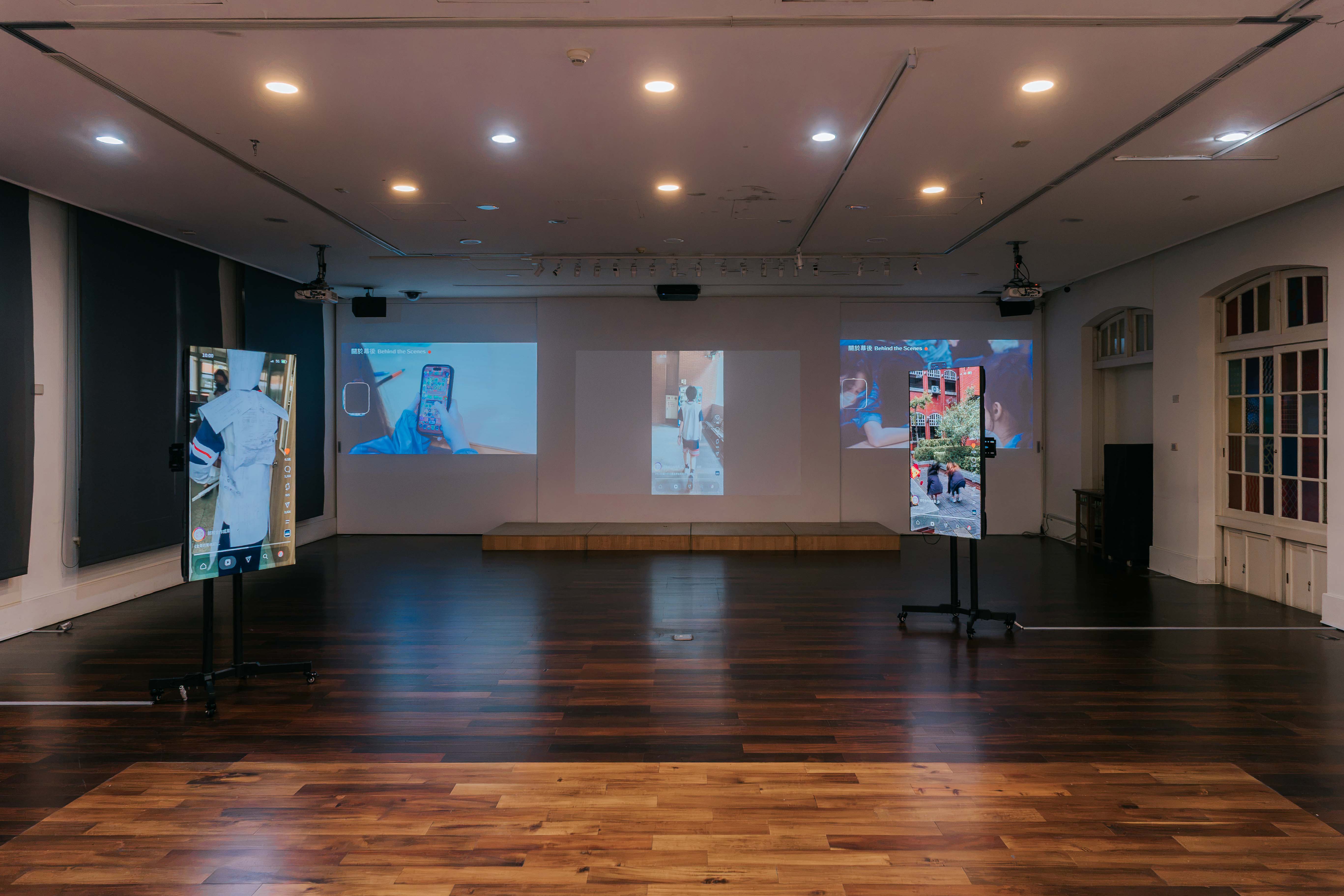
Since 2007, MoCA TAIPEI has partnered with Jian Cheng Junior High School on a Museum-School Collaboration Project, now in its nineteenth year. In 2026, artist Tsui Kuang-Yu was invited to work with visual arts teacher Chen Yang-De and performing arts teacher Chang Chiao-Ming, guiding ninth-grade students in co-creating Understanding the world like a time traveler.

The literal translation of this work is “Computing the Peacock Mantis Shrimp’s Point of View with a Capacity of 1,300 Milliliters”; the figure 1,300 milliliters refers to the average volume of the human brain, while the peacock mantis shrimp possesses a far more complex array of photoreceptors than humans, allowing it to perceive colors and wavelengths beyond the range of human vision. The creative project took the students’ own experiences of school and daily life as its starting point, using humor, irony, and situational conflict to guide them in using their phones as instruments of observation and recording, turning the ordinary matter of school and everyday life into short-form video. Like the peacock mantis shrimp, they were encouraged to rediscover details that are often overlooked because they seem so ordinary. Through the students’ lenses, viewers can also glimpse thoughts these young people may not usually say aloud, and so come to a fresh understanding of the many facets of ordinary life.

Tsui Kuang-Yu was born in Taipei, Taiwan in 1974. In 1997 he graduated from National Institute of the Arts and has exhibited internationally since, including Venice Biennale, Liverpool Biennale, Werkleitz Biennial, Reina Sofia Museum, ZKM Center for Art and Media, Contour Biennial, Chelsea Art Museum, Mori Museum, OK Centrum.

Tsui Kuang-Yu has been trying to respond to the adaptation relation between human and the society from a biological point of view. He also attempts to redefine or question the matrix of the institution we inhabit through different actions and experiments that ignore the accustomed norm. His repetitive body experiments accent the absurdity of the social values and reality that people have grown accustomed to.

Community Mural Workshop

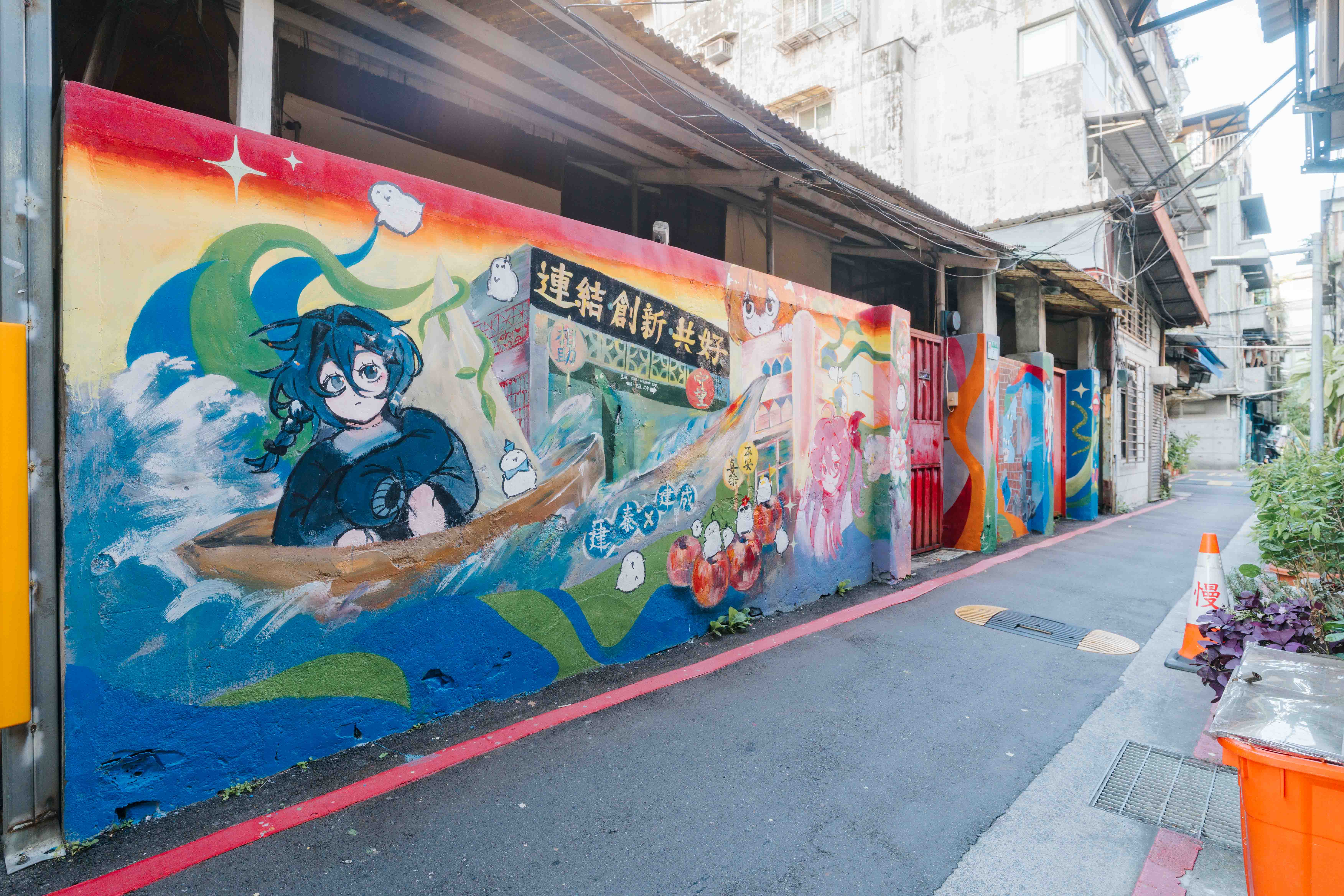
Every neighborhood has its own stories and scenery. This workshop is a collaboration among Jiancheng Junior High School, the Jiantai Village Office, Datong District, and MoCA TAIPEI, with artist Chan Yu Chu invited to lead students into the surrounding streets. Under the theme of “Local Fantasies,” and drawing on the industries, cultural character, and everyday life particular to Jiantai Village, the students turned their observations, memories, and imaginings into a mural. By bringing art into public space, the students came to know a familiar neighborhood anew and gave shape to a shared memory belonging to the place itself.

Artwork Introduction

Canary Minuet
I Dwell Here, Yet Belong Nowhere: The Sojourner
I Dwell Here, Yet Belong Nowhere: The Contemplative Sojourner
I Dwell Here, Yet Belong Nowhere: The Layered Sojourner
Arboreal Animals, Little Monsters
Small Coronations in the Lanes — Best Emotional Mending Award
Small Coronations in the Lanes — Award for Setting Time in Place
Small Coronations in the Lanes—Award for Quiet Kindness
MORE

Event

活動名稱

活動地點

活動時間

CLOSE

CLOSE

Notice Copyright & Privacy Policy

Copyright Notice

MOCA Taipei holds a high respect for the copyright of others, and it is stated in MOCA Taipei’s terms of service that any user of the museum’s service shall not infringe on others’ copyright. Therefore, MOCA Taipei hereby ask all our users to respect others’ copyright. If you think any of the content on MOCA Taipei’s website or anyone using MOCA Taipei’s service has infringed on your copyright, we strongly advice to you to file a complaint according to the regulations stated below, and MOCA Taipei customer service center will initiate related procedures as soon as possible.

  • Regulations Governing the Report on Copyright Infringement

    If any of the content on MOCA Taipei’s website or anyone using MOCA Taipei’s service has infringed on your copyright, please fill out the “Copyright Infringement Notice,” provide the information and statements listed on the notice, and send them to MOCA Taipei via fax.

    1. Signature of the copyright owner or the signature of the proxy of the copyright owner; document proving the ownership of the copyright and the copyrighted contents, i.e. the cover and related pages of a publication, print-outs of webpage contents and the URL.

    2. The webpage and URL containing the contents that cause the copyright infringement.

    3. Your contact address and phone number.

    4. A written statement stating that you believe the use of the webpage content is without the consent of the copyright owner, the proxy of the copyright owner, or the authorization of the law.

    5. A written statement confirming that the information you state in the notice is truthful and you hereby make the statement as the copyright owner or the proxy of the copyright owner.

  • MOCA Taipei’s principle of handling the report on copyright infringement:

    1. MOCA Taipei will remove the webpage content claimed to cause the copyright infringement as soon as possible after receiving your notice, and will inform the user about the infringement via email. If the said user objects to said infringement, MOCA Taipei can provide your name, email or phone number to said user so that direct communication can be achieved to resolve the dispute.

    2. According to MOCA Taipei’s privacy policy and related regulations, MOCA Taipei is only allowed to provide a user’s personally identifiable information to a third party by the request of the law or a governmental agency unless said user agrees or for the purpose of providing a service. Therefore, when you file a report, MOCA Taipei will only remove the contents causing the copyright infringement, and will not provide you any personally identifiable information of said user. If you wish to obtain the user’s information, a legal proceeding must be filed at the District Prosecutor’s Office or the Criminal Investigation Bureau, who will issue an official letter to MOCA Taipei requesting the user’s information. In the case, MOCA Taipei will comply accordingly.

Privacy and Data Protection Policy

MOCA Taipei values user’s privacy very much and has implemented the following privacy and data protection policy, which is listed below for your reference.

The privacy and data protection policy includes MOCA Taipei’s management of personal identifiable information collected when providing users the website service as well as MOCA Taipei’s management of any personal identifiable information shared between the museum and our business partners.

The privacy and data protection policy is not applicable to any enterprise other than MOCA Taipei, nor does it apply to those that are not staff or managements employed by MOCA Taipei.

When you register a MOCA Taipei account, use MOCA Taipei’s products or services, browse MOCA Taipei’s website, take part in related promotional activities or gifting programs, MOCA Taipei will collect your personal identifiable information. MOCA Taipei is also allowed to obtain said information from our business partners.

When you register a MOCA Taipei account, you will be asked to provide your name, email, date of birth, sex, work title, field of profession and personal interests. Once your registration is successful and the account is successfully logged into for the use of our service, we will be able to recognize you.

MOCA Taipei also automatically receive and record the server data on your browser, including IP address, the information in MOCA Taipei’s cookie and the record of visited webpages.

MOCA Taipei uses the information for the following purposes: to improve advertisement and webpage contents provided for you, to complete your request for a certain product and to notify you about a special event or new project.

MOCA Taipei will not sell or loan your personal identifiable information to anyone.

In the following circumstances, MOCA Taipei will provide your personal identifiable information to a governmental agency, an individual or a company.

To obtain your consent before sharing the information with other individuals or companies.

To provide a requested product or service, which requires sharing your information with other individuals or companies.

To provide a requested product or service, which requires providing the information to companies providing the product or service on behalf of MOCA Taipei. (Without our notice in advance, these companies will not have the right to use the personal information we provided for purposes other than provide a product or service.

To abide the law or the request of a governmental agency.

When an action on the website violates MOCA Taipei’s terms of service or the specific user’s guidelines of a product or service.

Other information required to be disclosed by the Computer-Processed Personal Data Protection Law or other regulations.

To protect user’s privacy and personal data, MOCA Taipei is not allowed to look up other user’s account information for you. Should you need to look up someone else’s information due to legal issues, please contact the police to file a legal proceeding. MOCA Taipei will fully cooperate with the police to provide necessary information to assist with the investigation and solve the case.

MOCA Taipei will access your computer setup to extract MOCA Taipei’s cookie.

MOCA Taipei allows the companies that place advertisements on the museum website to access your computer setup and extract cookies. Other companies will follow their own privacy and data protection policies to use cookies instead of MOCA Taipei’s policy. Other advertisers or companies are not allowed to extract MOCA Taipei’s cookie.

When MOCA Taipei conducts tasks related to our products and services, web beacons are used to access our website network to use cookies.

MOCA Taipei’s users have the right to revise their personal MOCA Taipei account information and set up personal preferences anytime, including the option as to whether you would like to receive notifications about special events or new products.

Based on the Computer-Processed Personal Data Protection Law, when the purpose of using your personal information expires, MOCA Taipei will provide the service to delete your account and data. However, to do so, please contact us via telephone.

MOCA Taipei adopts a method that conforms to the Computer-Processed Personal Data Protection Law to protect your personal information.

To protect your privacy and safety, the data in your MOCA Taipei account will be password-protected.

Under some circumstances, MOCA Taipei uses the standard SSL security system to ensure the safety of data transmission.

MOCA Taipei has the right to revise our policies at any time necessary. When the regulations regarding using personal information are extensively revised, public announcements will be made on our website to inform you about the revisions.

Please tell us your ideas and suggestions here.