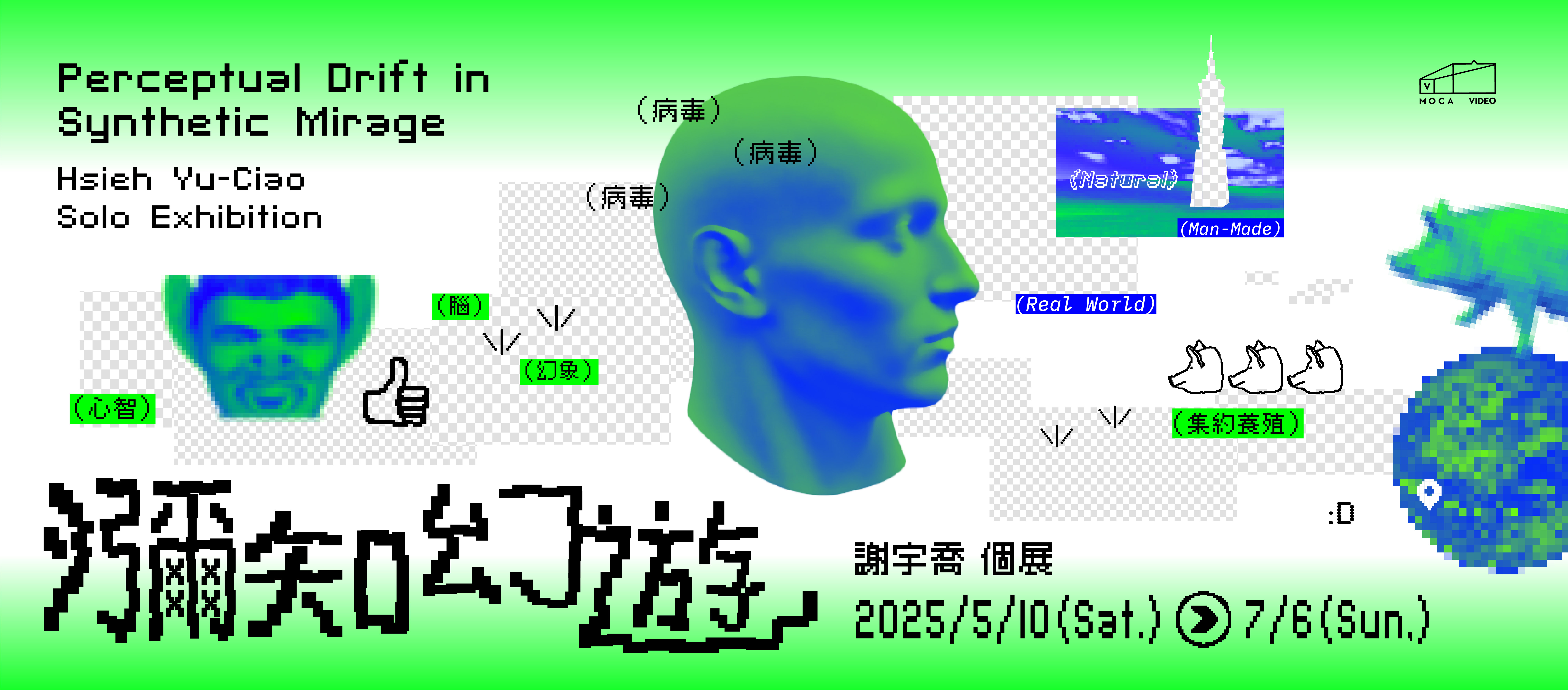
As digital technology and images continue to infiltrate our everyday life, the act of seeing is no longer just a simple perceptual behavior but a cognitive process that is jointly constructed by media technology and cultural power. The green screen is the core of the exhibition, Perceptual Drift in Synthetic Mirage, as it explores the visual politics and the manipulation of symbols behind its use as a tool for image production. Moreover, by linking the two works, Deterritorialization: a wander in illusory realm and Paradise of Chaos II: Virus Creation, thoughts are prompted on how our views are shaped and constructed in an era of image overproduction.
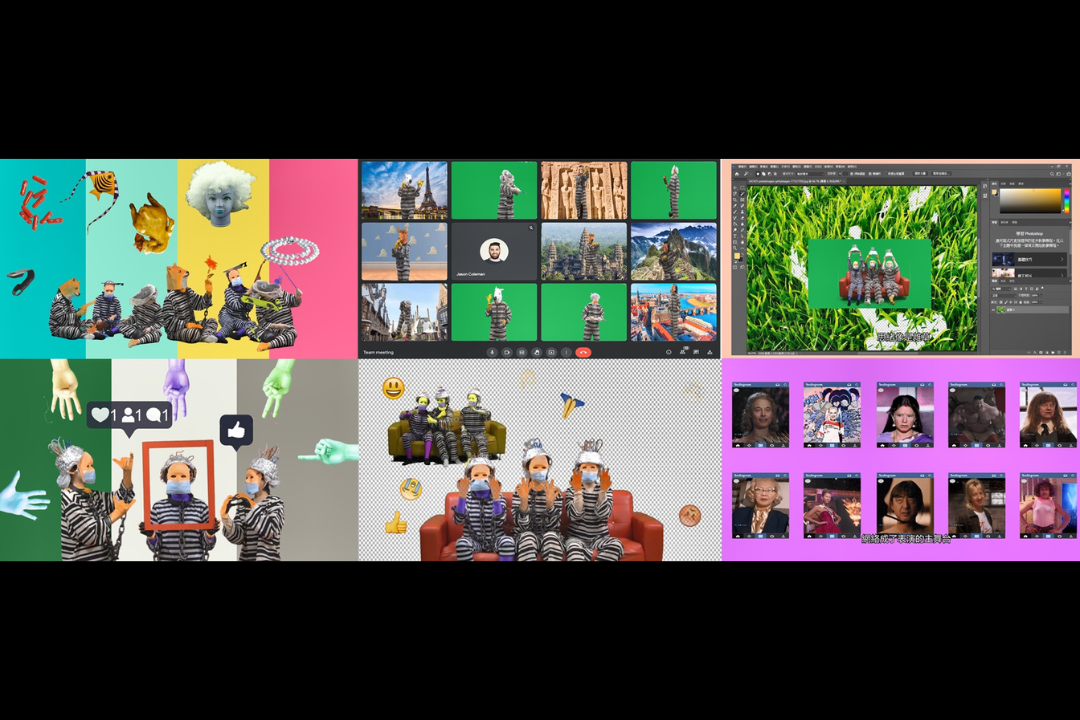
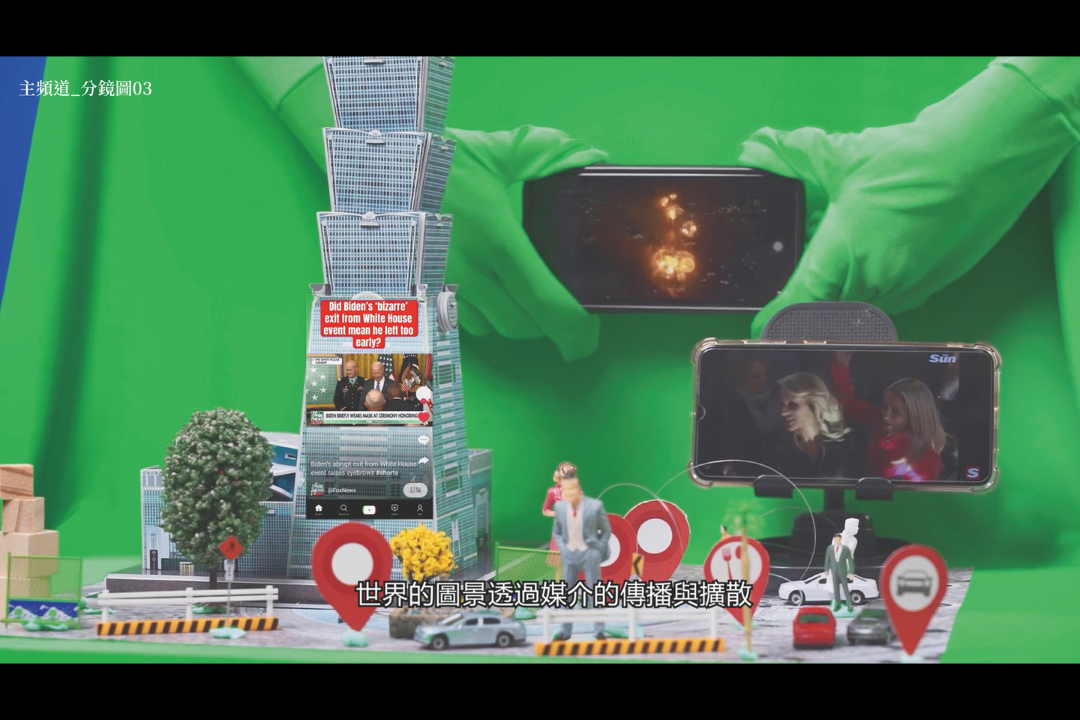
Through the construction of micro-green screen models, the collection of Google Earth coordinates, AI-powered questions and answers, and the capturing of action images of a person donning a green screen outfit, Deterritorialization: a wander in illusory realm is a work that explores how common and non-mainstream images and scenes are filtered, modulated, and arranged under cultural globalization. As images become increasingly ubiquitous today and are constantly being produced and disseminated, their original contexts, whether positively beautiful or catastrophic in nature, are gradually being homogenized and flattened.
Paradise of Chaos II: Virus Creation, on the other hand, features a single-channel video that reveals how “mind viruses” generate and spread. Referencing how green screen technology extracts and reconstructs background contexts, the work serves as a metaphor for how contemporary media penetrate concepts and reshape values within the semiosphere. Like viruses, images have infiltrated our cognitive structure, rendering the way of seeing no longer pure, and a new order of perception is thereby shaped.
Amidst an information overflow and being set adrift in illusions, the exhibition Perceptual Drift in Synthetic Mirage not only focuses on images as representations of production but also reflects on the conditions of their generation and the visual logics behind them, subsequently re-examining the subjectivity of the way we see.