Line, an important element in artmaking, is something every painter or artist tirelessly pursues throughout life, and as life progresses, the lines are given a special personal quality and texture that belongs solely to each individual artist. The Chinese saying “linearity is penmanship, and penmanship is mindfulness” expounds on the essence of the “line,” suggesting that it is the transformation of one’s inner essence, energy, and spirit into an external material linearity. Hence, it is a generative essence that provides visual perception and sensation to people.
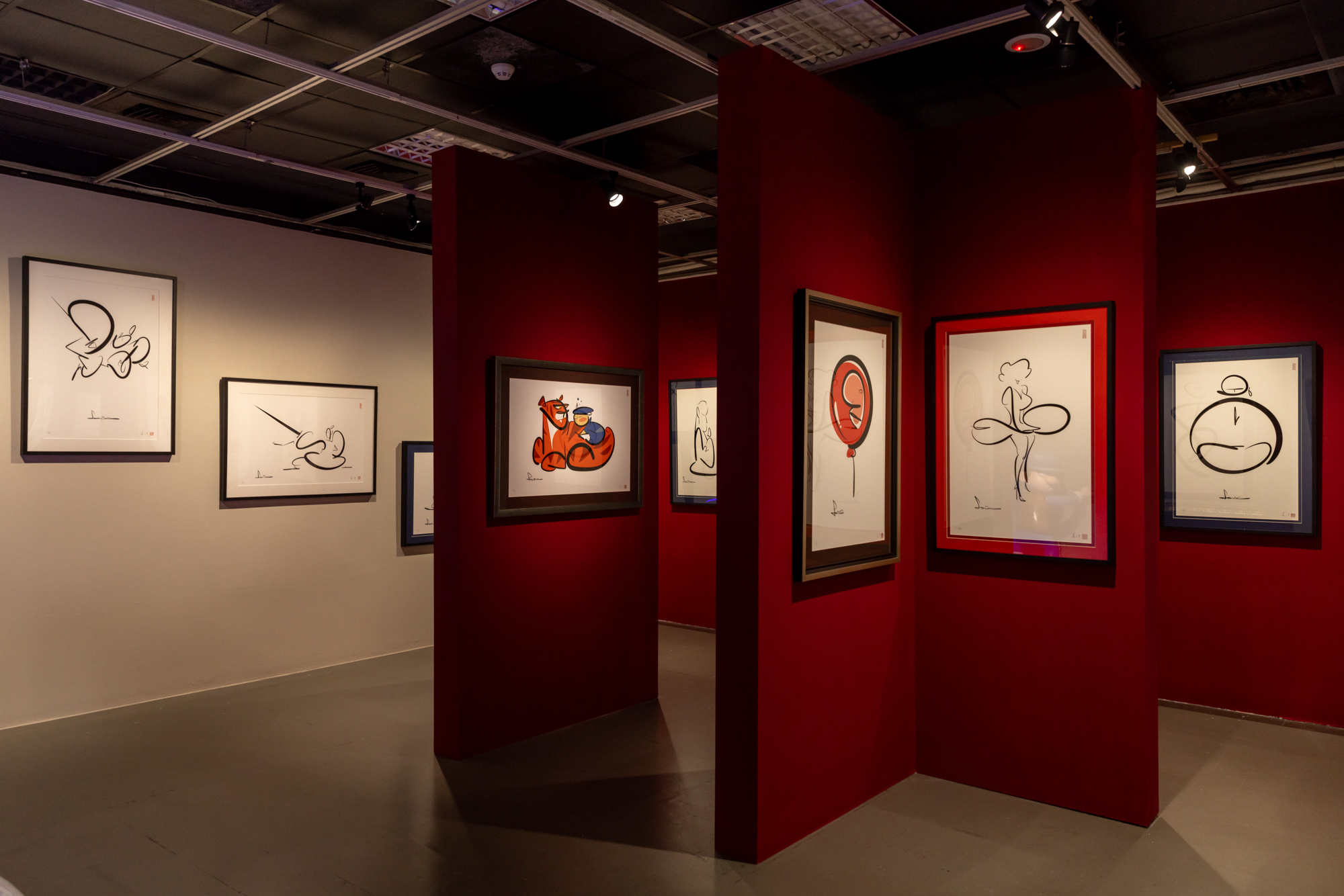
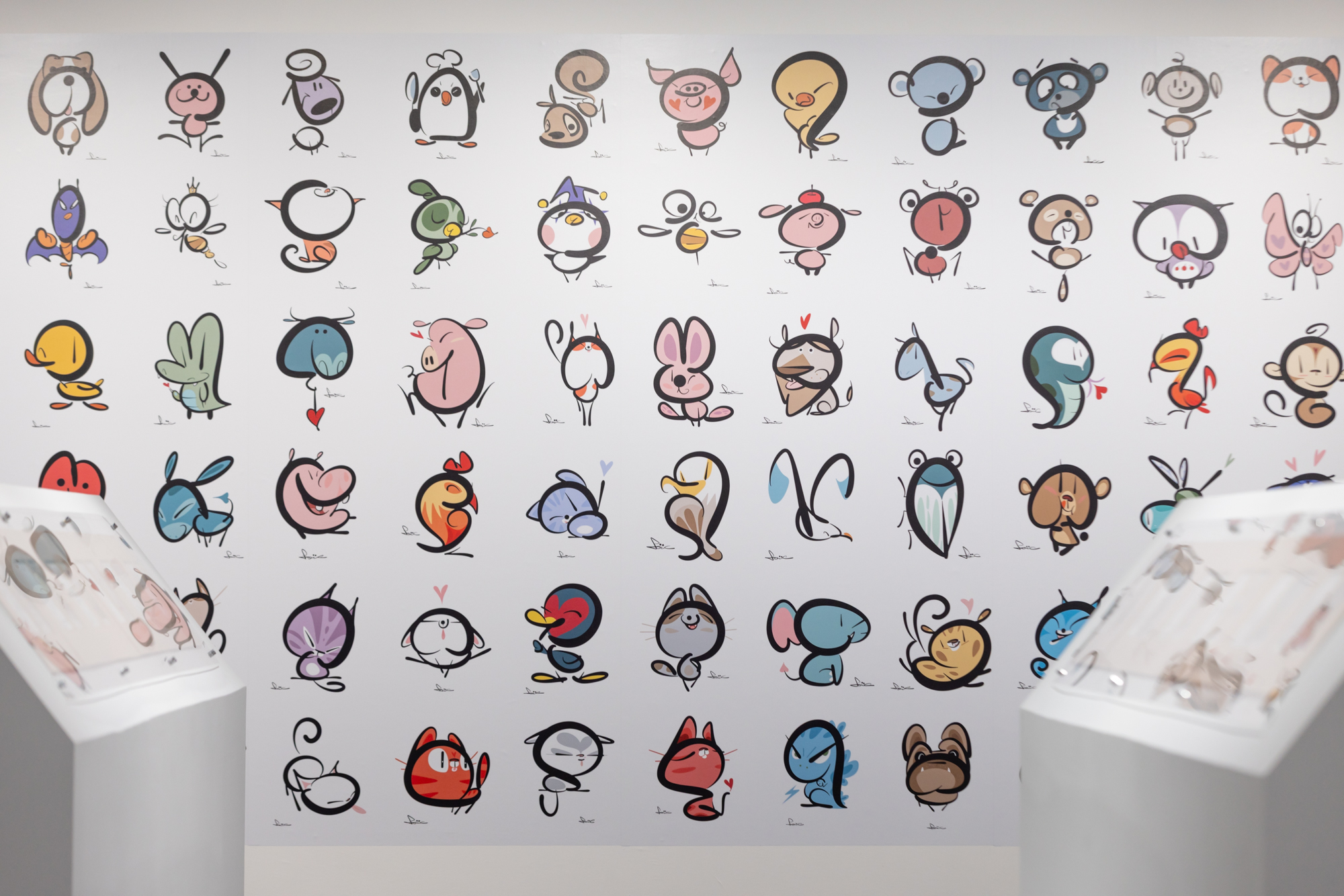
For comic artist Loïc Hsiao (Hsiao Yen-Chung), the line was the one formal element of art that he paid the most attention to in the 40 years of his creative career. Throughout those 40 years, Hsiao’s rheology of lines had transitioned from a “hand-pen” approach to “fingers and hand as one.” He gradually started to create lines for his fluid comic art style that incorporated the way of working the pen which aligned with the essence, energy, and spirit of traditional calligraphy. Then, with the impact of the digital age, he developed the “Sword Finger Art Style” in 2017. Integrating innovation and philosophy, he endeavored to unify the drawing pen and his fingers, which felt like a droplet of dew falling on a finger. Unhindered and with ease, his fingers worked like a sword, with martial arts, calligraphy, and Zen philosophy incorporated to create various images of people and animals with lines of purity and simplicity.
The “Sword Finger Art Style” was comic artist Loïc Hsiao’s process from resistance to discovery in the face of the conflict between digital technology and traditional art-making. In the dialectic of this tool, he realized that the finger is, intrinsically, a pen and also the undulating trajectory of the movements of the spirit and energy. So, by putting digital technology on the receiving side and allowing feelings and responses to form, essence, energy, and spirit can manifest. Instead of using a pen, he started to use his fingers to draw on a tablet computer. He created simple and fluidly rounded lines, with his fingers moving in dance-like gestures, ever so lively and neat. He created characters seemingly with one stroke and under one breath. The lines exerted a vitality that transformed complexity into simplicity, and the succinct strokes projected a state of Zen, revealing Hsiao’s philosophy, which was full of humor and love, and above all, simple yet profound.
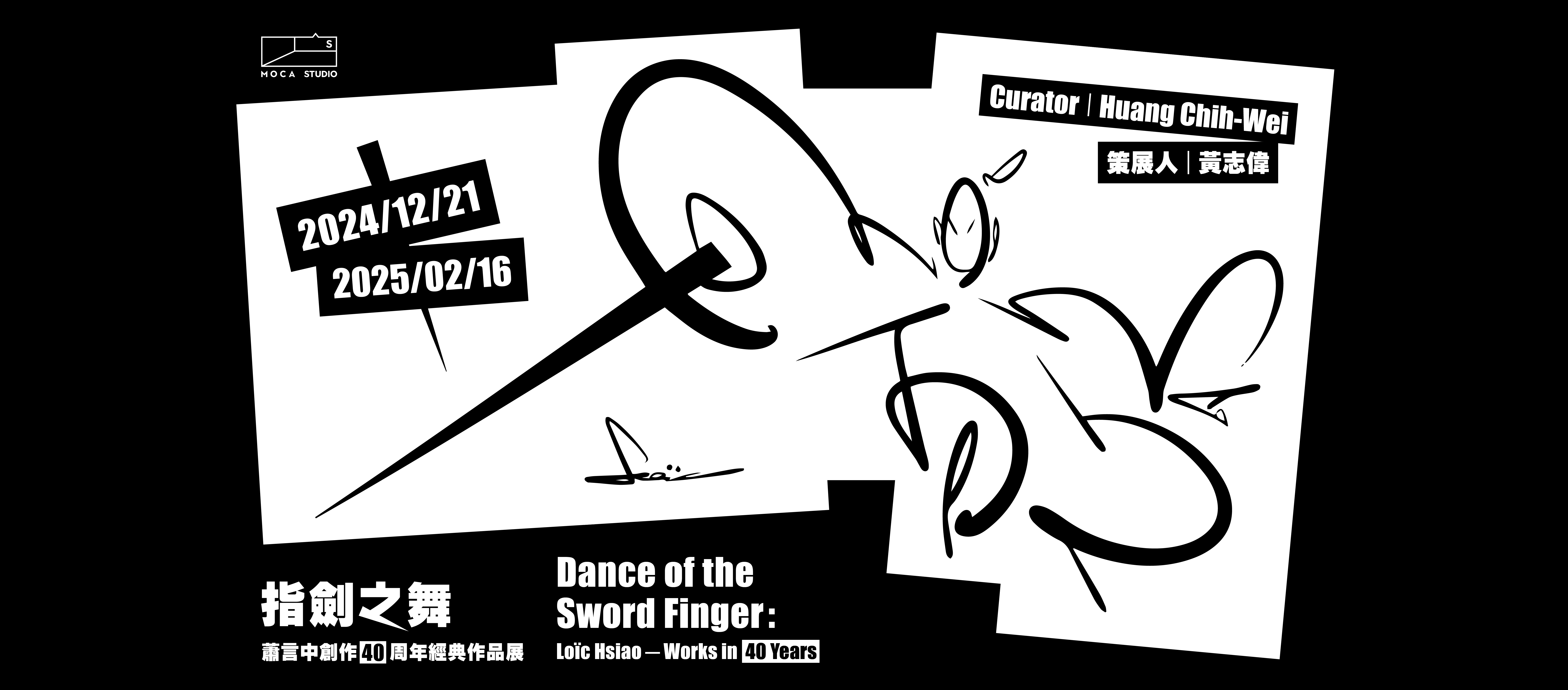
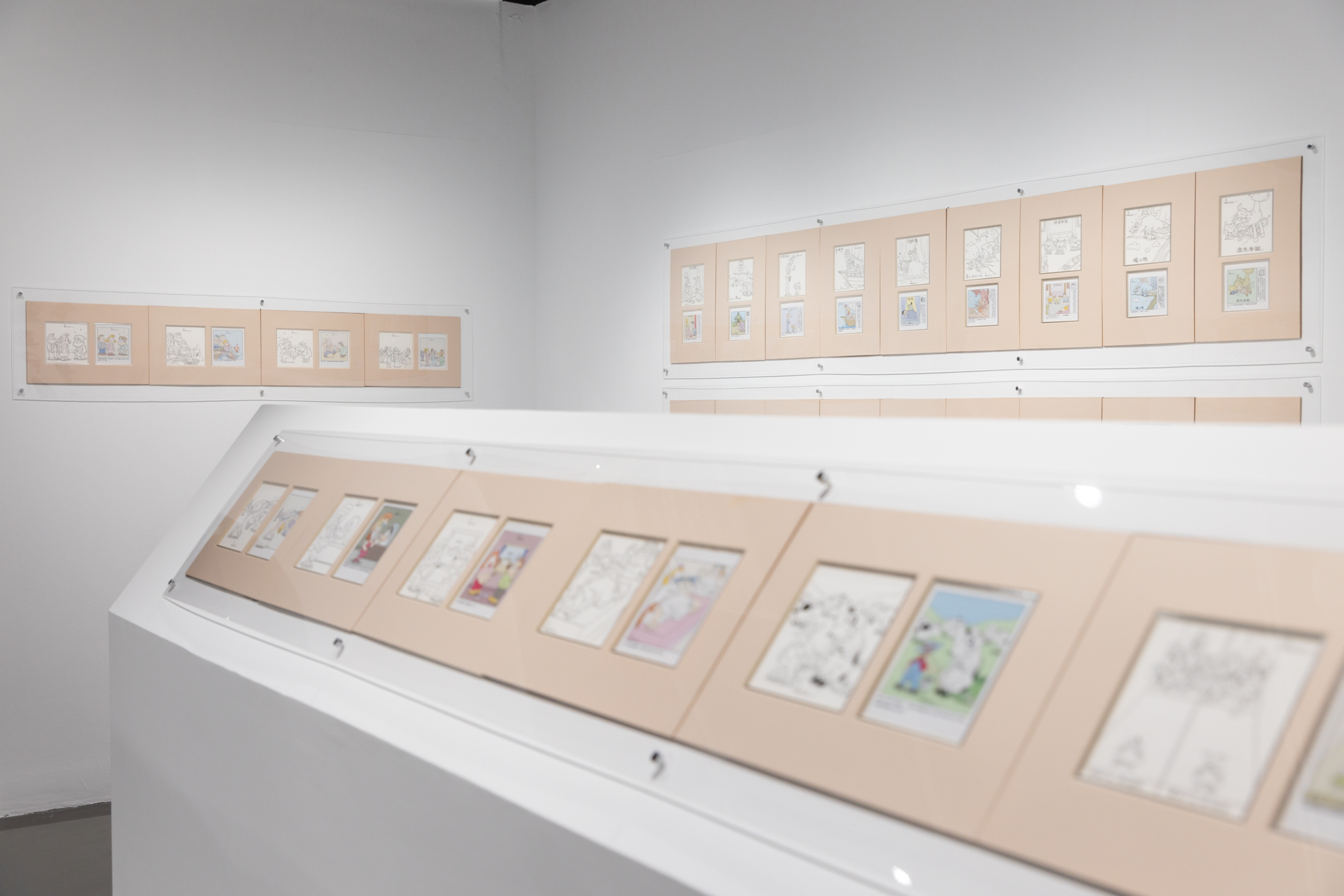
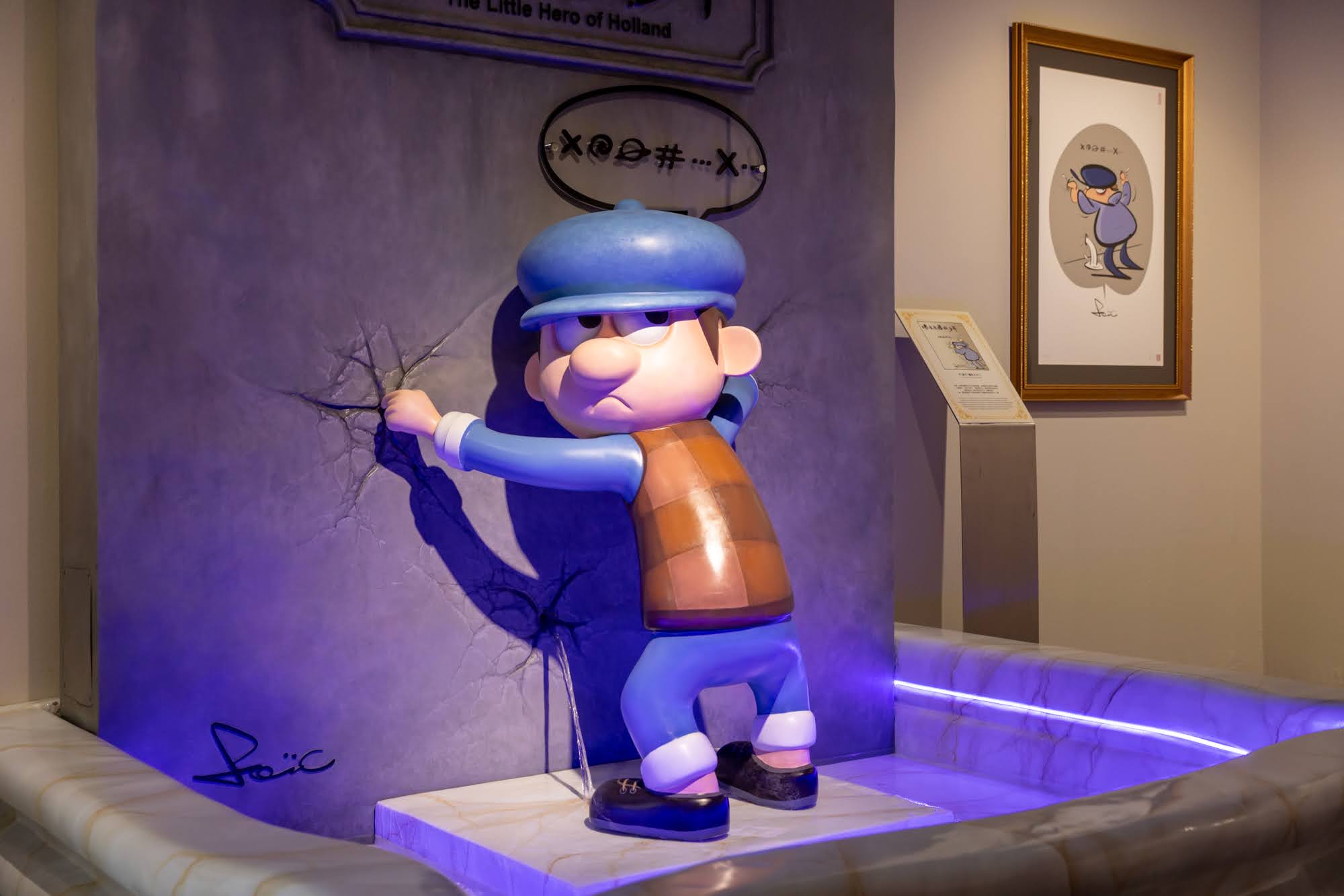
The exhibition Dance of the Sword Finger: Loïc Hsiao ─ Works in 40 Years is divided into three sections. The first section juxtaposes the manuscripts and the published versions of Loïc Hsiao’s early iconic comic works, including SHORT: Fairy Tales Untold, Plastic Surgery, and Stupid Thieves. The second section explores Hsiao’s stylistic evolution, particularly how he integrates the essence of traditional calligraphy into the linework of his comics. The third section presents his recent works, created using the “Sword Finger Art Style,” which simplifies complex forms with graceful minimalism. Taking a closer look at this comic genius’s creative mindset and journey, his grand philosophical ambition to elevate the expressive form of comics into an expression of art is also shared in the exhibition.