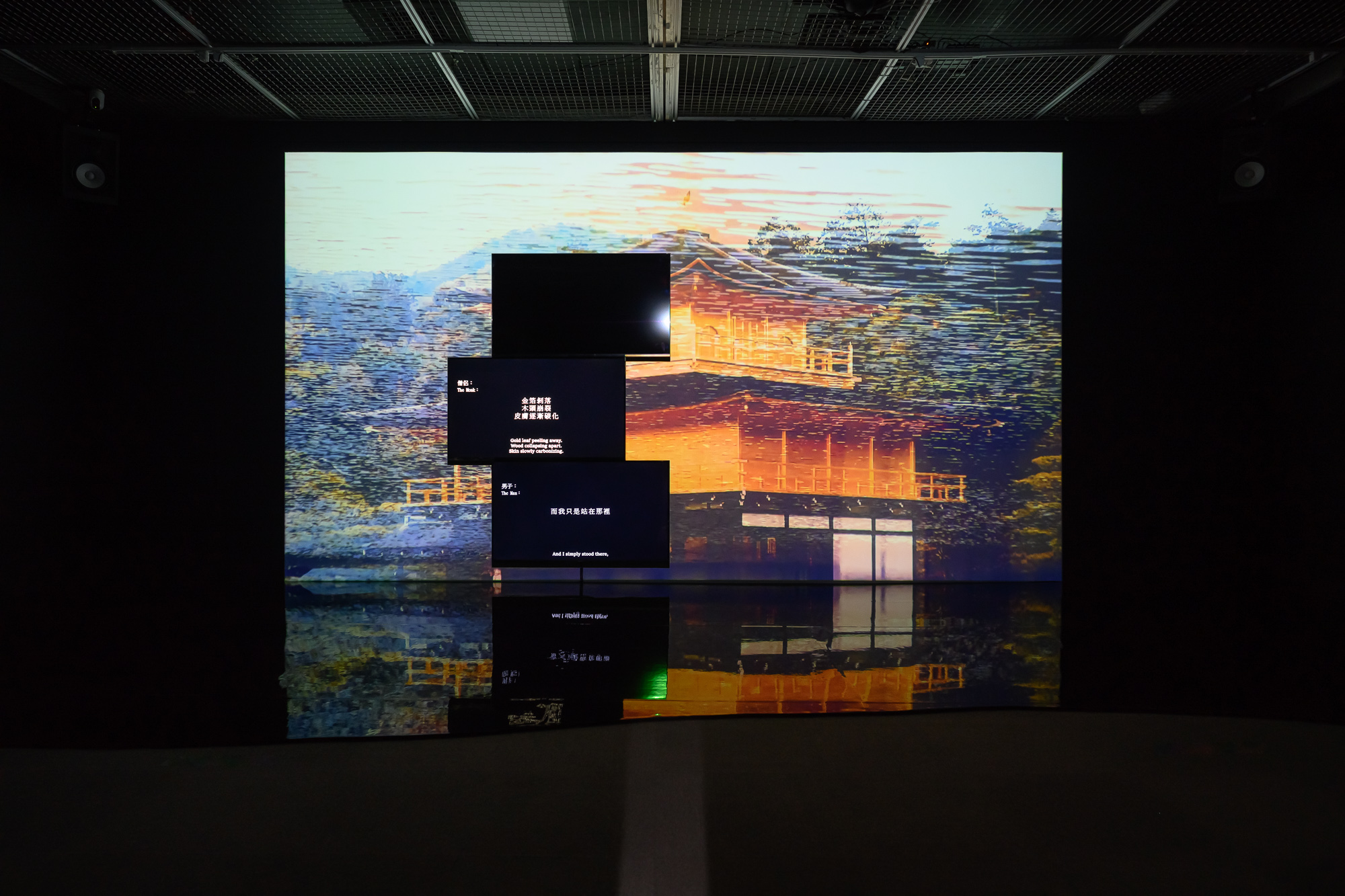
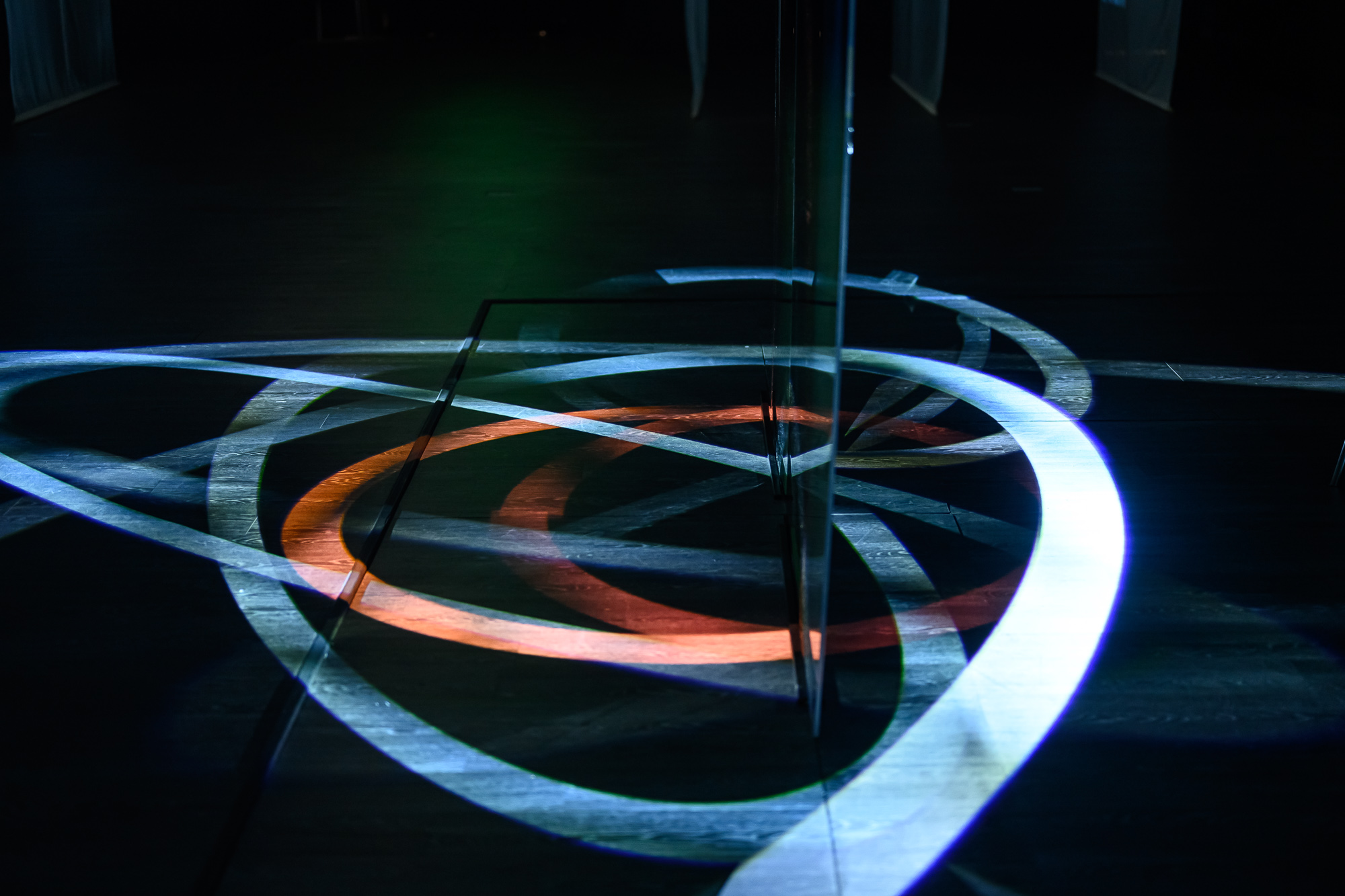
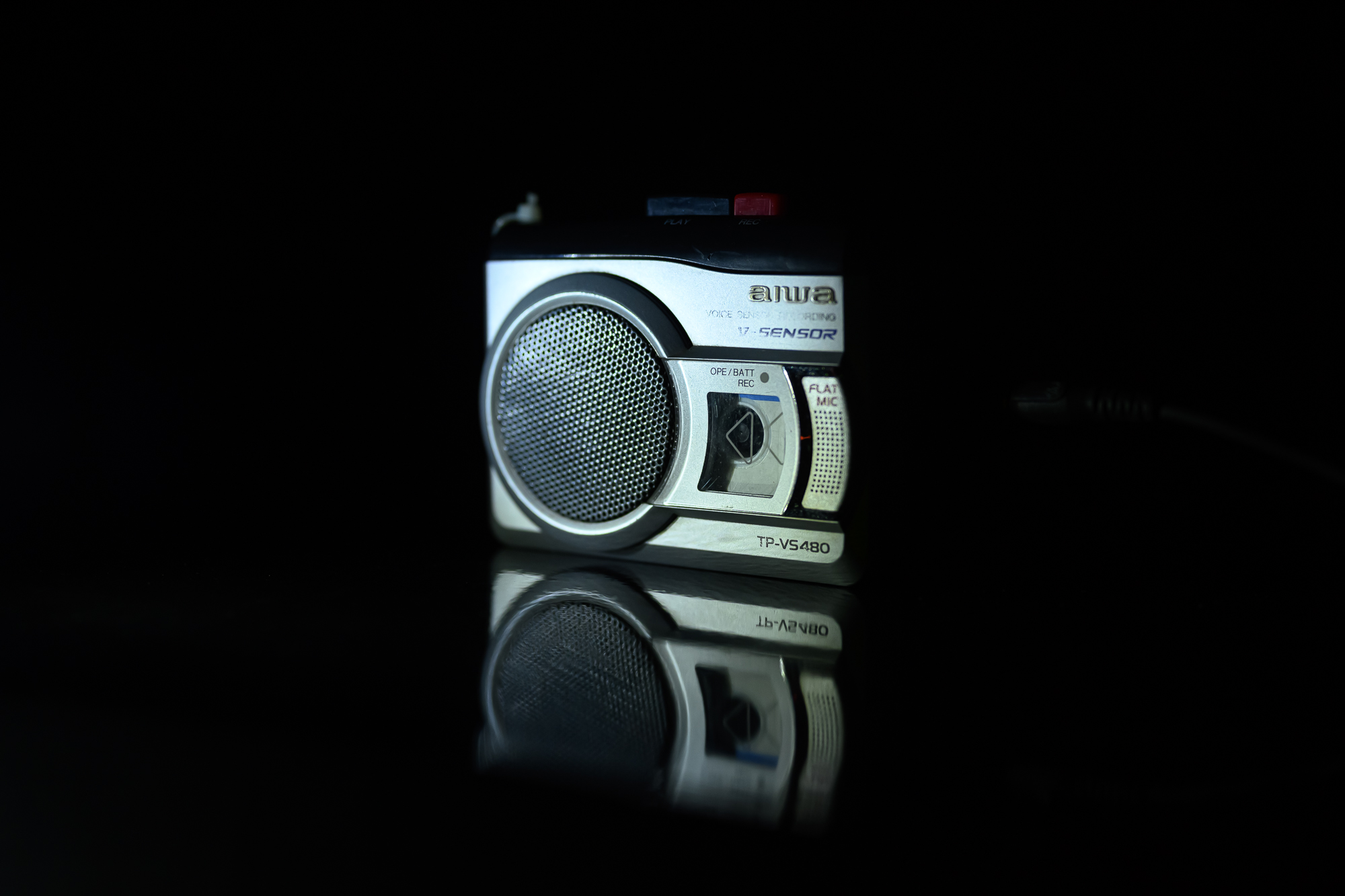
Ting Chang-En (b. 2000, Taipei, Taiwan) is an artist whose creative practice involves media, visual arts, and theater image, including video, image installations, and stage visuals. His work focuses on how images intersect with time and space, examining how viewing experience shifts through spatial arrangement and the relationship between spectator and performance. His recent works draw from the philosophy of technology to investigate the dialectical potential of poetic images and narrative within physical environments.
His exhibition experience includes Ars Electronica in Linz, Austria, the Kuandu Museum of Fine Arts, the TNUA Center for Art and Technology, the National Kaohsiung Center for the Arts–Weiwuying, the National Concert Hall, and the Taipei National University of the Arts (TNUA) Experimental Theatre. Ting earned his BFA from the Department of New Media Art at TNUA, and is currently pursuing an MFA in the same department with a minor in Visual Culture and Art History at the TNUA School of Fine Arts, continuing to explore the gaps in media art within visual contexts.
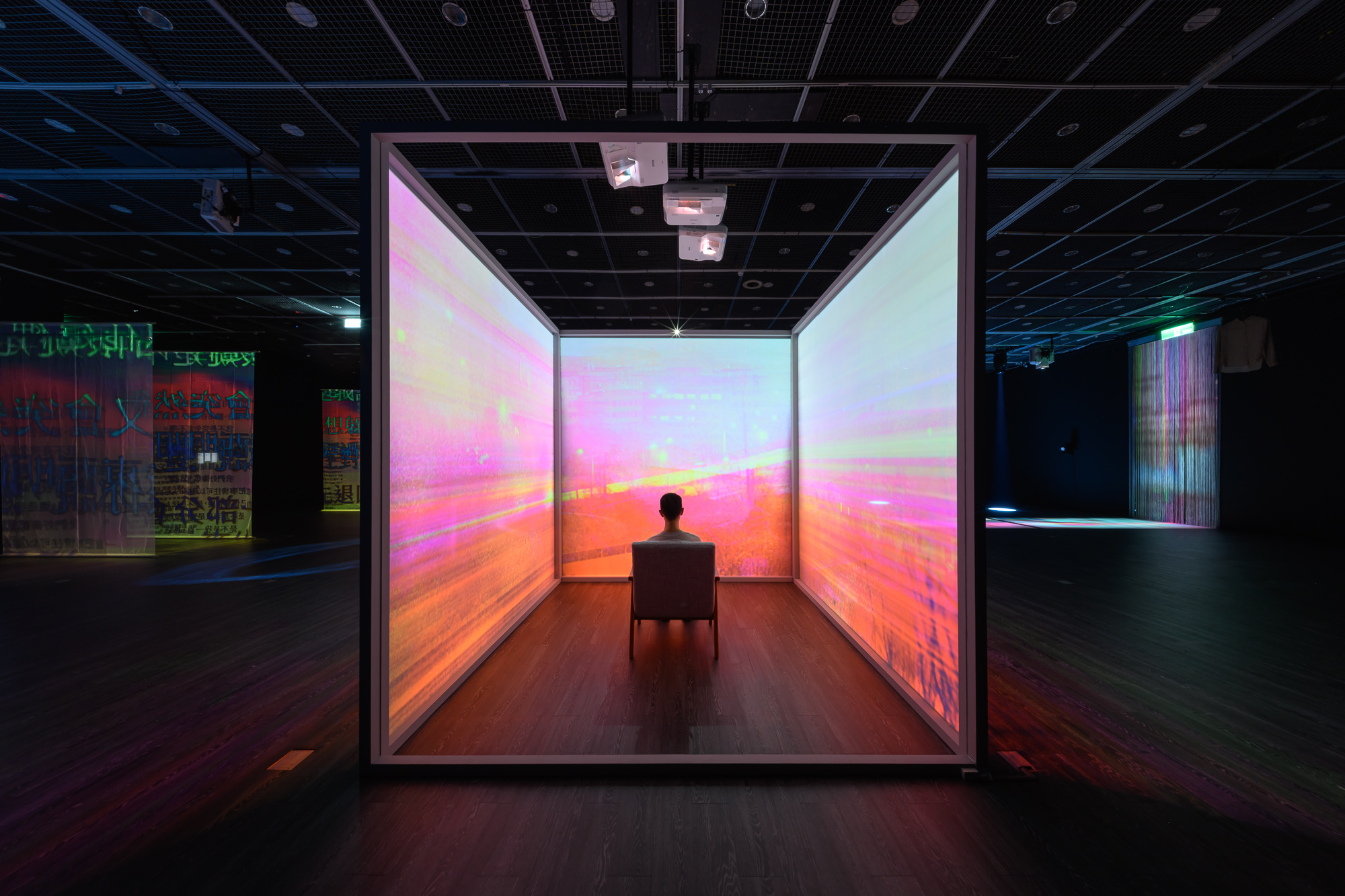
David Claerbout (b. 1969, Kortrijk, Belgium) lives and works in Antwerp and Berlin. His practice revolves around the concepts of temporality and duration, images suspended in a tension between stillness and movement, as well as the experience of dilated time and memory. He creates large-scale video-based installations that make the viewer part of the work—whether by establishing a connection between the projected image and the audience, by constructing a spatial relationship between the screen and the exhibition space, or by allowing a process in which “one scene can develop into another through the presence of the spectator and the passage of time” to unfold naturally. Claerbout describes his practice as “sculpting in duration. The definition of duration is different from that of time: duration is not an independent state like time, but an in-between state.” He was awarded the Will-Grohmann-Preis of the Berlin Akademie der Künste in 2007 and the Peill-Preis of the Günther-Peill-Stiftung in 2010, and participated in the DAAD Artists-in-Berlin Program (2002–2003). His work has been exhibited at major institutions including Centre Pompidou, San Francisco Museum of Modern Art, and Taipei Fine Arts Museum, and featured in major international exhibitions such as the Biennale of Sydney, Sharjah Biennial, and São Paulo Biennial. His works are held in major international collections including Centre Pompidou, The Museum of Modern Art (MoMA), the Solomon R. Guggenheim Museum, and the San Francisco Museum of Modern Art.
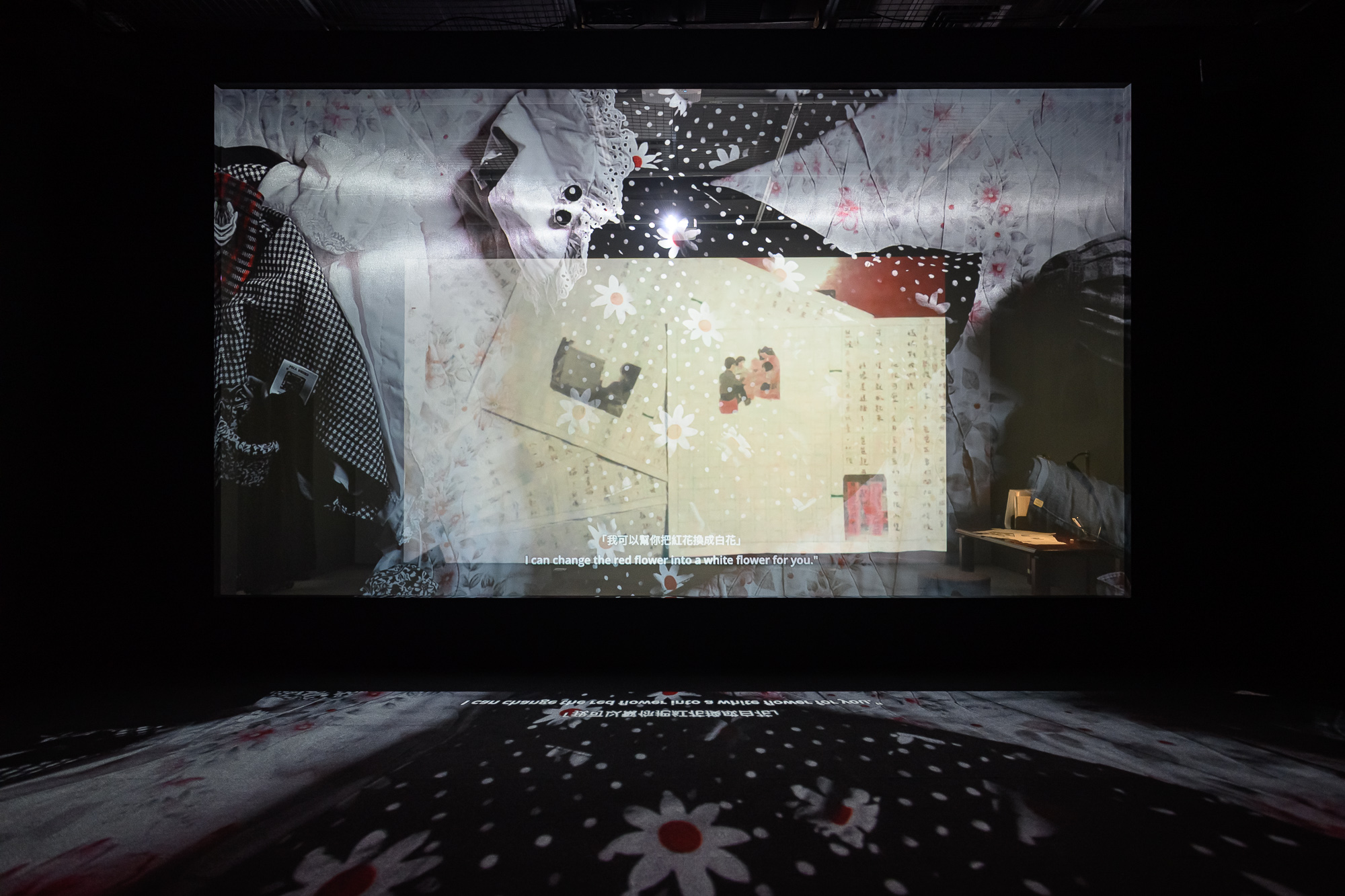
Chang Ting-Chen (b. 1995, Chiayi, Taiwan) received her MFA in Fine Arts (Mixed Media) from Taipei National University of the Arts in 2023. Her practice spans photography, video, image collage, found objects, and sculptural installation, focusing on the spatial and material extensions of the image. Often departing from personal experiences, family archives, and specific environments, Chang employs scanning, collage, and acts of viewing to treat images as materials subject to construction, disruption, and intervention. Through these operations, she develops strategies of narrative re-extension and reassembly. Her works have been exhibited in Taiwan, Greece, and Switzerland, including a solo exhibition at the Kuandu Museum of Fine Arts in 2025.
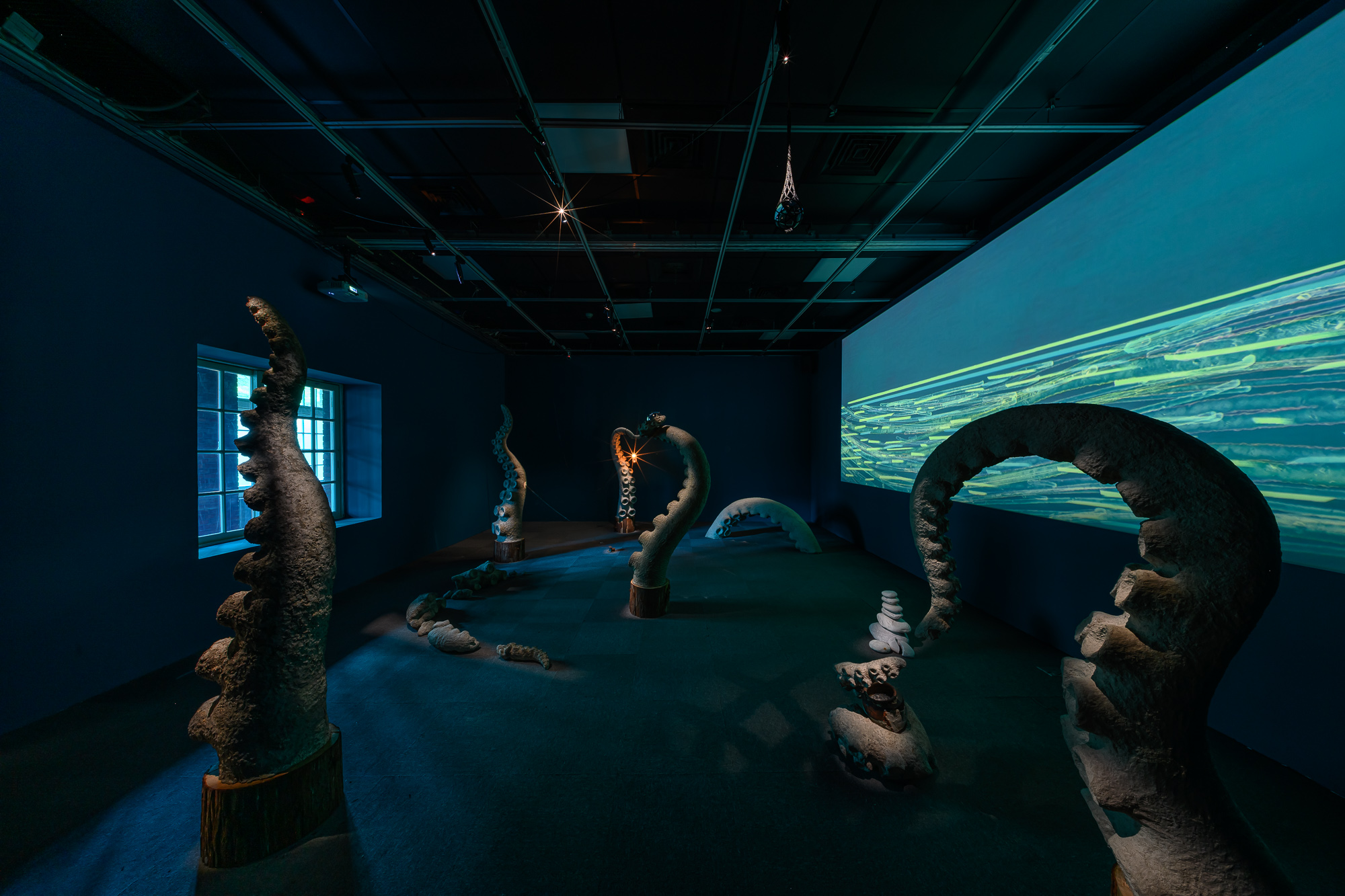
Tsai Yu-Ting (b.1999, Changhua, Taiwan) is an artist who lives and works in Taipei. He holds a bachelor’s degree in mechanical engineering and master’s degree in New Media Art from Taipei National University of the Arts (TNUA). His artistic vocabulary draws on diverse fields of knowledge, such as nature, technology, and history. Working across installation, video, and photography, his practice stems from life experiences and the exploration and identification of self, spirituality, place, and history. The individual is viewed from a topological perspective, and the ideas are generated by navigating through different systems and coordinates to interweave points of convergence.
Tsai’s recent solo exhibitions include Seeking for Absent Forms in Forests, Kuandu Museum of Fine Arts (2024); Ke-āu, Hong Foundation-Art (2025); Changhua County Art Museum (2025); and ALIEN Art Center. His works have also been presented in group shows including 2025 Taiwan Art Biennial—Black Water, National Taiwan Museum of Fine Arts; Festival PROYECTOR, Spain (2024); 2025 Ecos de Taiwán, Cuartel de Artillería, Spain; Annual Vertical Vision International Film Festival (VVIFF), USA (2024); Czong Institute for Contemporary Art, South Korea (2025); Ars Electronica Festival, Austria (2025); Taoyuan Art Center—TMOFA 2025 Taoyuan International Art Award, Taiwan; as well as in Thailand, France, and Lithuania.
Tian Zi-Ping (b. 1998, Taipei, Taiwan) focuses her practice on the spiritual connections between technological artifacts, digital belief systems, and humans. Using synesthesia as her method, she examines how the body and perception interact. Her work mainly takes the form of interdisciplinary exhibitions and performances, combining kinetic light installations, video installations, and new media dance theater. Moving between gallery spaces and theater settings, she creates narrative environments that bridge tangible materiality and sensory experience. Her achievements include the Ministry of Culture’s Taiwan and Australia Choreography Exchange Residence (2022-24), the First Prize in the Competition Category at the Taoyuan Technology Performing Arts Awards (2022), the National Taichung Theater’s “LAB X Young Artists’ Atelier” (2021), and the Outstanding New Media Art Award. (2019).
Lee Kuo-Han mainly works with video and projection, engaging in theater, installation, architecture, and body. His practice uses combinations and arrangements of heterogeneous materials, light, shadow, time, and visual signs to explore how image and space influence each other and the resulting perceptions, emotions, and meanings.
Lee has consistently collaborated across various performing arts disciplines, including theater, dance, and music, while contemplating the subjectivity of media in live performances and the balance between the performance itself and the media.
His works have been showcased at venues like the National Theater and Concert Hall, National Taichung Theater, and National Kaohsiung Center for the Arts–Weiwuying, as well as internationally in Macau, Denmark, and Austria. His works were selected for the “Multimedia and Projection Design” category at World Stage Design (WSD) for two consecutive editions, winning silver in Canada (2022) and gold in the United Arab Emirates (2025).
A light lover in pursuit of peace and freedom.
She graduated from the Department of Theatre Design at Taipei National University of the Arts and is skilled in narrative lighting aesthetics and visual language. She is drawn to light with the depth of storytelling. For her, light is not only a sign, but also a form of existence that transcends language and visual atmosphere, through which she seeks to render perception and experience visible while allowing them to remain in continual deferral.
Formerly known as Cheng Chao-En and now as Tse-Lun, the artist continues to work under the name Chao-En to preserve his professional recognition. He is currently a freelance artist specializing in theatrical music and sound design.