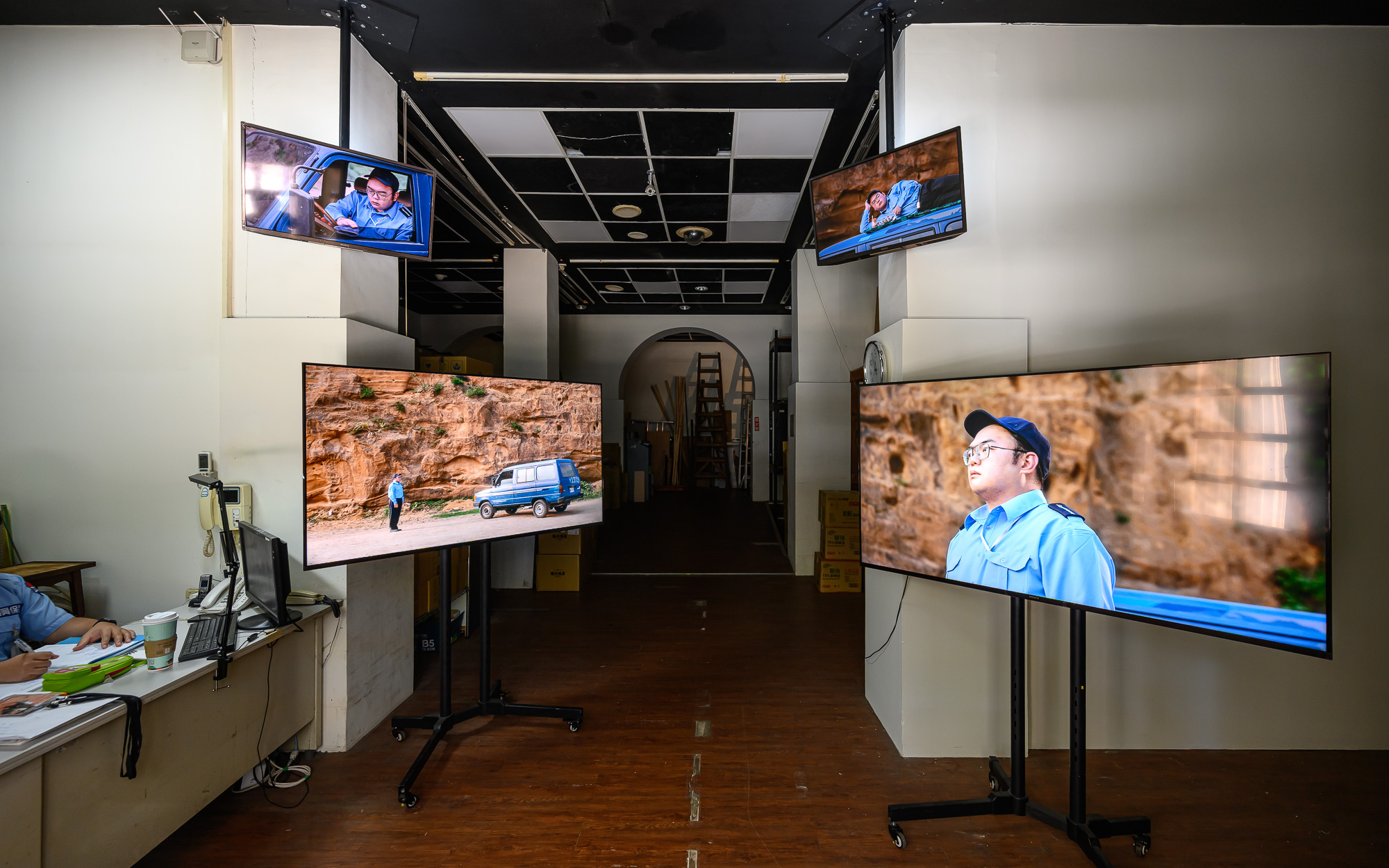
Val Lee is a director and visual artist based in Taiwan. Trained in Filmmaking and Sociology at the State University of New York, Lee works across expanded cinema, large-scale live art, and participatory performance to construct temporary situations. The work focuses primarily on social relations and particular states of the contemporary psyche. Recent works often resist establishing a central event or narrative. Instead, Lee transforms spatial conditions and reorganizes structures of spectatorship, leaving the meaning of reality in suspension. Bodies appear and disappear without any fixed direction or intent, drawing viewers into nonlinear fields charged with fiction, yet resistant to definitive interpretation.
Lee’s moving-image works have been exhibited at the Hayward Gallery in London, SOMA Art Berlin, the Museum of Contemporary Art, Taipei, the Vernacular Institute in Mexico, Haus der Kulturen der Welt in Berlin, the Maison Européenne de la Photographie, RPM Film Festival, the Gwangju Biennale, the Biennale Jogja, and the Taiwan Art Biennial. Lee’s live works have been presented at the Aomori Contemporary Art Centre, the Taipei Fine Arts Museum, Kyoto Art Center, and the Experimental Theater at the National Theater and Concert Hall in Taiwan, among other institutions. Lee has received support from the Hong Foundation, the Asian Cultural Council, the National Culture and Arts Foundation, the Taipei Performing Arts Center, and Yamanaka Suplex, and was awarded the Taishin Arts Award for Visual Arts in 2017.
Based in Tainan, Taiwan, Lin Ying-Chieh is a visual artist working with site-responsive installation, public infrastructure, and commemorative spatial practices. Her practice originates from site-based explorations of mobility and habitation within everyday environments, informed by observational approaches associated with modern urban studies. In recent years, she has expanded her work through sculpture, video, text, and performative elements to examine the differences in expression between individuals and collectives following socio-political events.
Lin’s work investigates how public spaces, memorial sites, and urban infrastructure interact with contemporary communities. Through mise-en-scène and participatory strategies, she constructs alternative spatial situations that reveal how memory, affect, and social experience are shaped and negotiated within specific contexts.
Lin’s works have been exhibited at MoCA TAIPEI, Chiayi Art Museum, and Tainan Art Museum. She was awarded the Next Art Tainan Award (2017), selected for the Taoyuan Contemporary Art Award (2019), nominated for the Taishin Arts Award (2020), and supported by the Tianmei Art Foundation (2021).
Wang Young-Hsiang, currently based in Taiwan, holds an MFA in New Media Art from Taipei National University of the Arts. His recent practice is informed by his experience in exhibition planning and installation, as well as observations of Taiwan’s contemporary art ecosystem and the politics of space. He primarily works with conceptual art, spatial installations, ready-mades, and moving images to explore and experiment with spatial relationships. His work approaches the notion of the center from the margins of geography, identity, and place. By highlighting overlooked details in daily life, it invites critical reflection on the meaning of space, boundaries, and objects. Recurring self-reflexive questions in his work also engage with power relations and politics, reflecting a broader concern with how we exist within society. Through his own experiences, Wang explores the boundaries between art and society, seeking to bring artistic practice closer to everyday life.
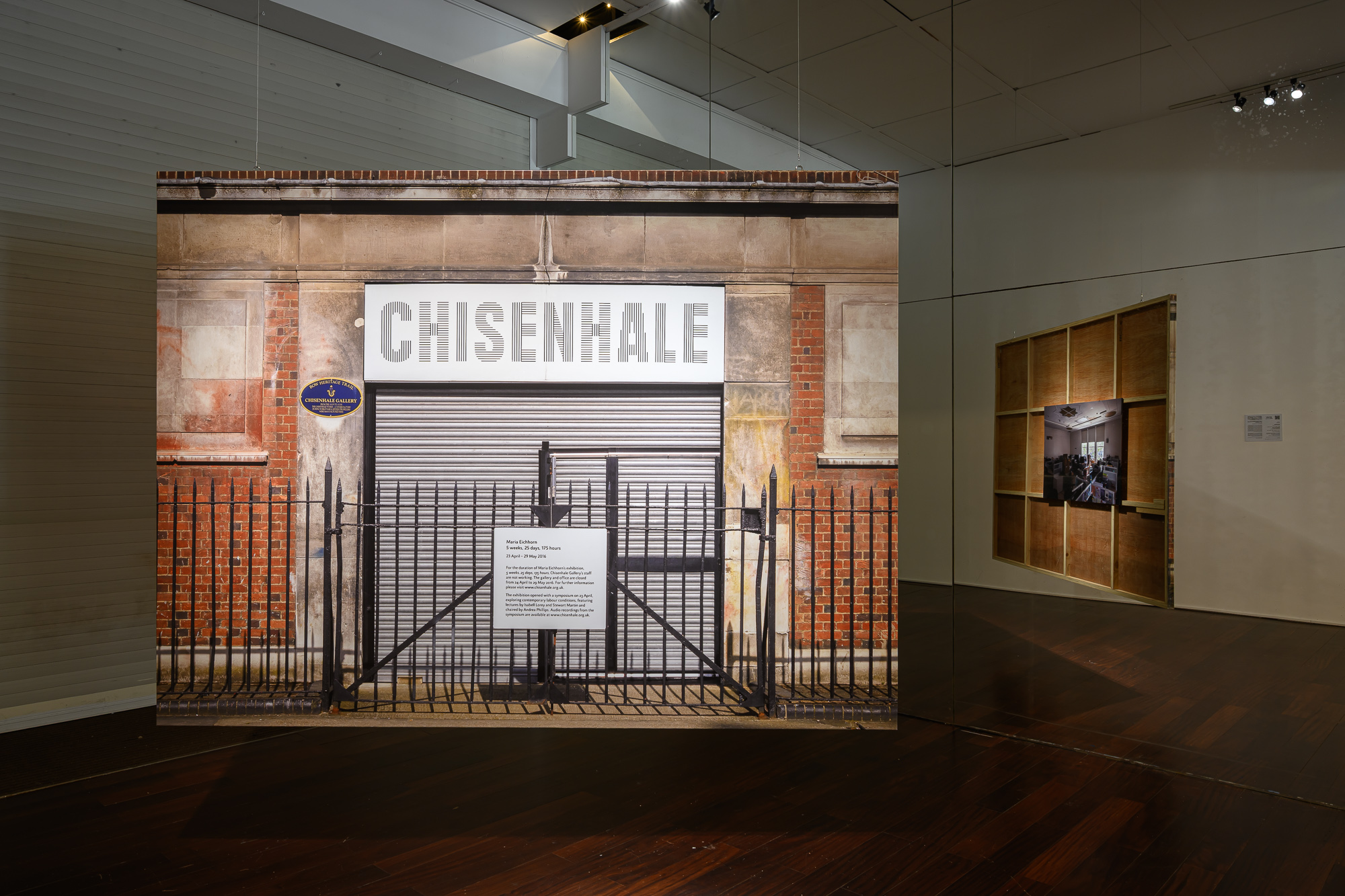
Chen Liang-Jung is an artist from Tainan, based between Taipei and London. Rooted in material culture research, bodily experience, and field-based observation, their practice takes as its starting point the objects and systems embedded in everyday life—familiar yet rarely examined—constructing situations of quiet tension through site-specific installation and live action. Chen’s work has been presented at the Victoria and Albert Museum and Whitechapel Gallery in the UK, and the National Gallery of Victoria in Australia.
With a background in theater, Ho Mu-Yun explores the intersections of space, media, text, and people to develop community-focused, project-driven social initiatives. Aiming to be an art activist, she broadens social dialogue by blending cultural observation, in-depth fieldwork, and topical research. She is a current board member of the Taipei Art Creator Trade Union, where she is gradually deepening her understanding of the complex nature of artistic labor by navigating a constantly changing fieldwork landscape. In 2021, she co-founded Existone Workgang, using artistic activism to engage the public and connect events with audiences at large.
Born in 1999 in Hsinchu, Taiwan, Chang Hsin-Yu graduated from the Department of New Media Art at Taipei National University of the Arts. His work spans interactive art, sound, and installation, and he considers sound both a means of exploring the world and an abstract yet direct form of energy. His sound installations explore the spatiality, systems, and transformations of sound, using generative mechanisms to respond to life experiences and imagination. Rather than executing comprehensive planning and control, he believes that sound and randomness within specific rules are more exciting and dynamic.
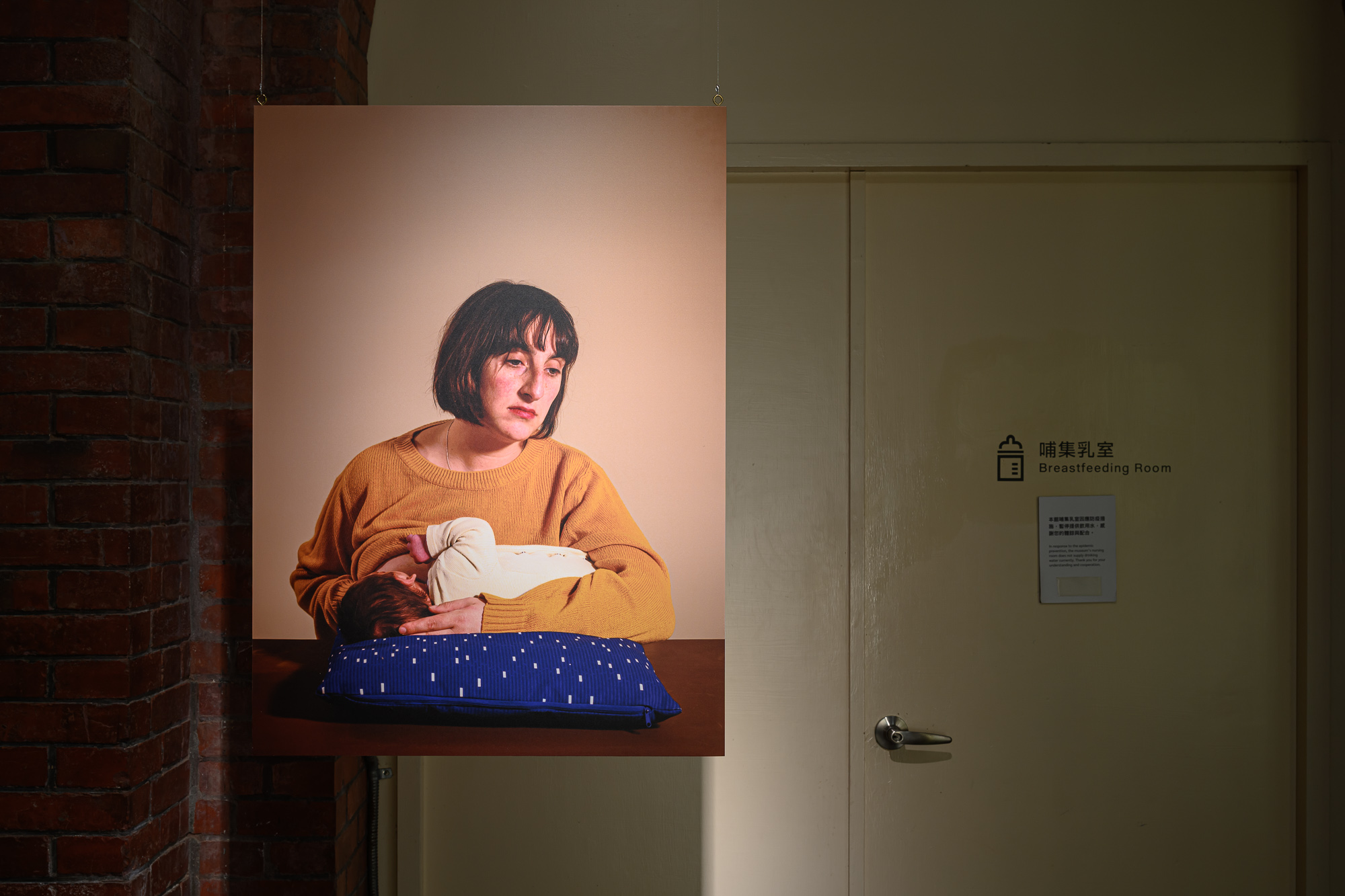
Dawn Parsonage is a British photographer whose work is concerned with our relationship with, and perception of photography. She focuses on the power the presence of the camera has, and how we can harness that power or circumnavigate it. She has a deep interest in how real emotions can be captured in photography, as well as how photography has the power to help us re-see the world around us.
Her debut solo show, The Boring Exhibition, has been featured across the international press. The Boring Book of the exhibition can be found in the libraries of the Royal Photographic Society and the Martin Parr Foundation. She exhibited as part of The Irreplaceable Human–Conditions of Creativity in the Age of AI at Louisiana Museum of Modern Art, Copenhagen in 2023-2024, which was seen by 220,000 visitors. Her commission Here and There exhibited as part of Departures at the Migration Museum, London. A series of emotional portraits of people who were emigrating from the UK.
Dawn lives with her partner and young daughter in St Leonards-on-Sea and has a studio as part of local photography collective Picnic-on-Sea.
Born in 1989 in Kaohsiung, Taiwan, Huang Shao-Ying graduated from National Changhua University of Education in 2012 and then received a master’s degree from the School of Fine Arts at Taipei National University of the Arts in 2016. Currently based in Tainan, she primarily works with objects, sculptures, three-dimensional pieces, spatial installations, and mixed media, bringing together different materials and forms for them to merge and collide. Most of Huang’s work stems from the accumulation of her personal, everyday perceptions and experiences, as well as her imagination of the conditions of life and existence in society. Through metaphors evoked by others or by certain objects, her works explore forms of ambiguous correspondence that seek to reveal the possibilities of the body and of human existence within society.
Born in 1994 in Kaohsiung, Taiwan, Lin Nan-Hung graduated from the Graduate Institute of Plastic Arts at Tainan National University of the Arts in 2025. He works predominantly in sculptures and spatial installations, focusing on the relational structures between everyday behaviors, objects, and spaces. By intervening in existing spaces and conditions in which they are used, he disrupts everyday situations, thereby subverting familiar life experiences and visual logic. In scenes that may appear abrupt, absurd, or even comical, Lin seeks to reveal authentic conditions, allowing everyday experiences to be reexamined and reimagined.
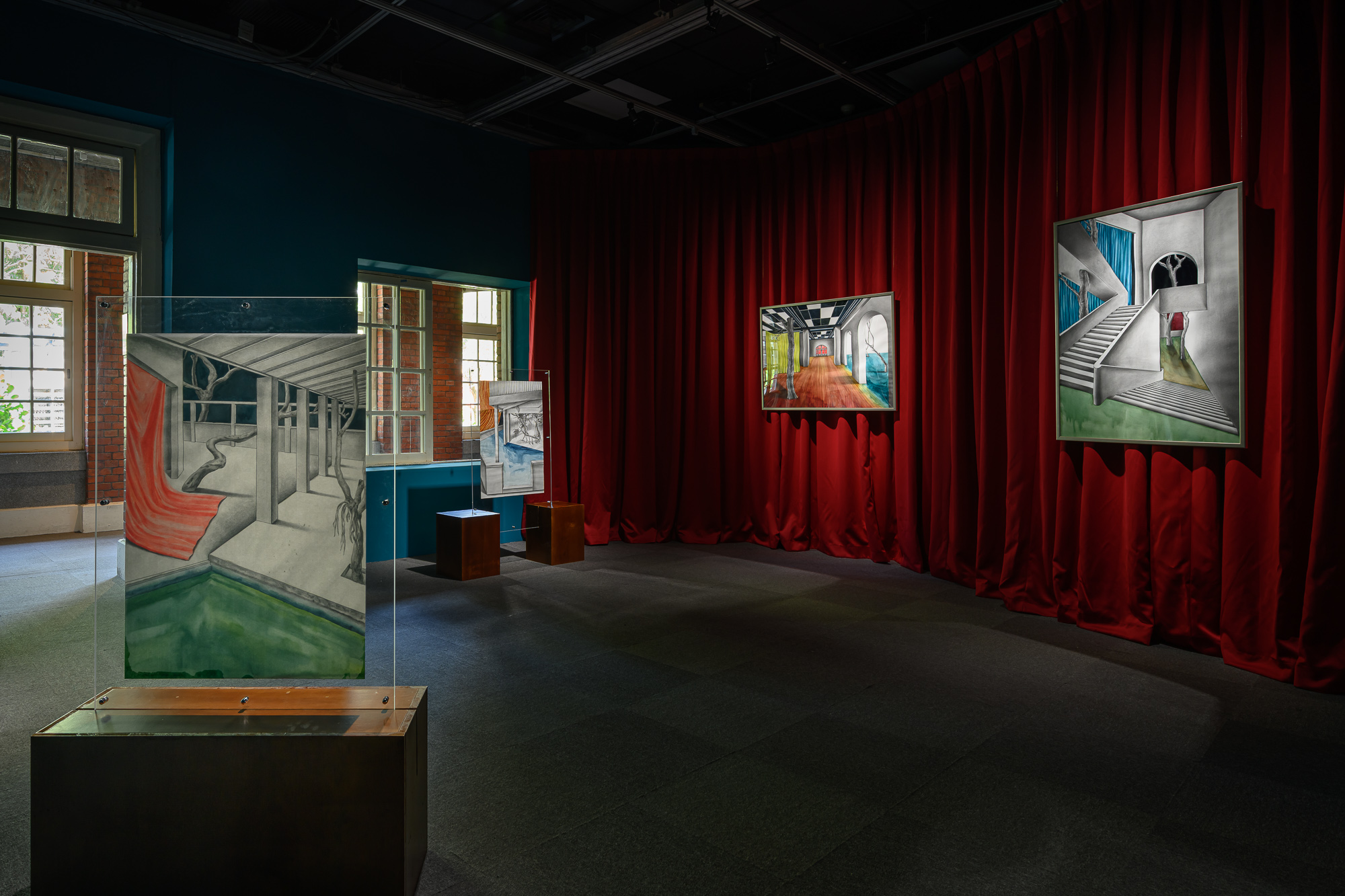
Born in 1985 in Taipei, Taiwan. Hsu Li-Tzu is an artist and art educator who graduated from University of the Arts London. She currently lives and works in New Taipei City. Her work focuses on spatial narratives in contemporary society. Through painting, she reconstructs forgotten spaces under institutional frameworks, assembling them into peculiar interior landscapes. She has participated in various visual design projects, including the main visual for the artist collective Ghost Hill Ghost Shovel, illustrations for Occupy Taipei and the Anti-Nuclear Action Season, as well as cover artwork for Coolloud Quarterly.
She has taken part in artist residency programs at Com Peung in Chiang Mai and Grafis Minggiran in Indonesia. Her work has been exhibited at the Walking Books Library, tadpole.point / Treasure Hill Artist Village in Taipei, Ho-Yo Space in Tainan, South London Gallery and The Crypt Gallery in London, and the Surakarta Institute of the Arts, Biennale Jogja 18 (2025) in Indonesia. She has received funding from the National Culture and Arts Foundation for overseas artistic exploration (2017) and international cultural exchange (2019).
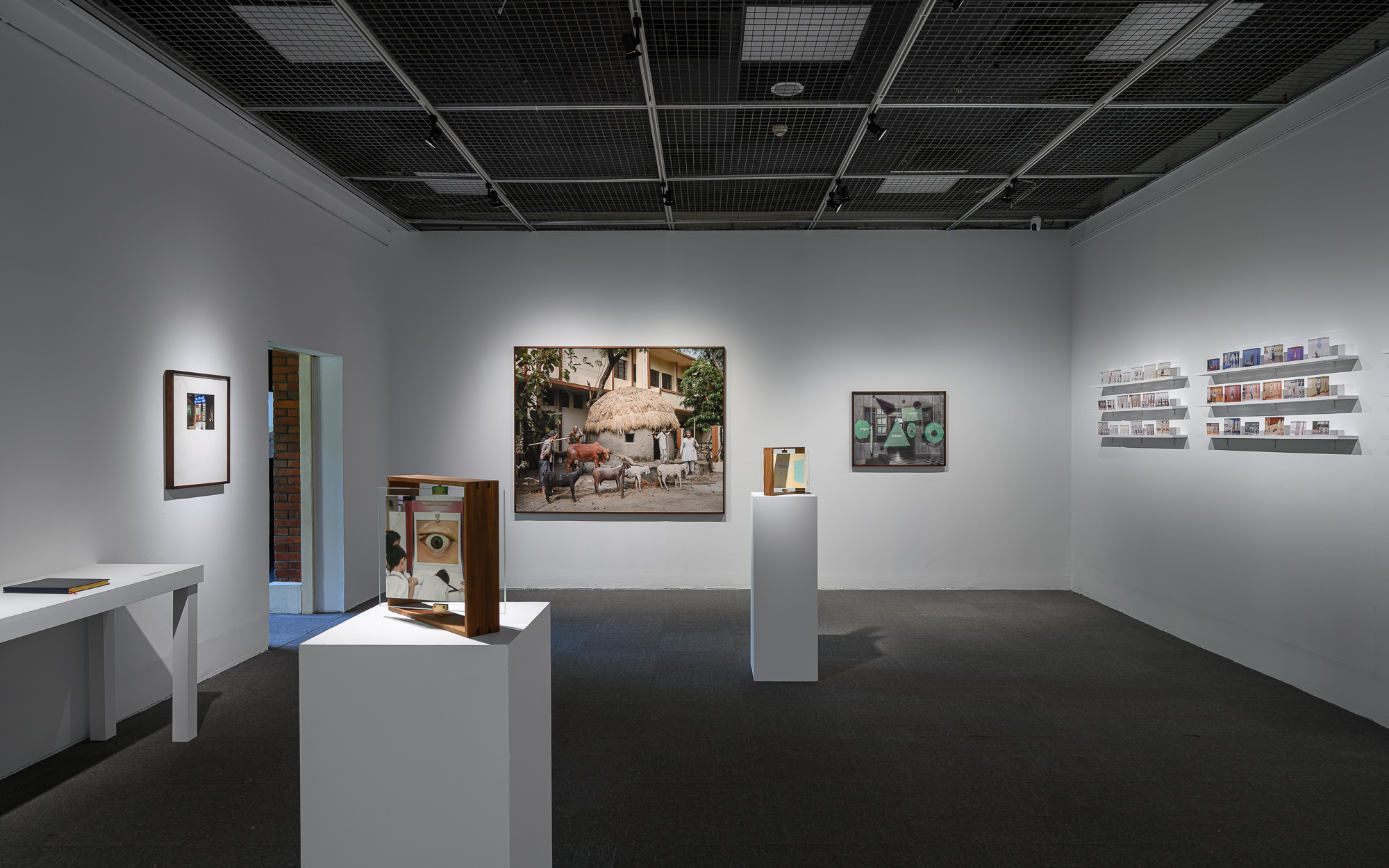
Philippe Calia (b. 1985, Paris) is a French-born visual artist based in Bengaluru, India. His work has been exhibited in museums, galleries, and festivals across Europe and Asia, including Les Rencontres d’Arles, Kunstmuseum Wolfsburg, Jimei x Arles and the Serendipity Arts Festival. His most recent solo exhibition, The Second Law, was presented at TARQ, Mumbai, in 2025. His work is held in the collection of the Centre national des arts plastiques (CNAP), Paris, as well as in private collections.
Trained in the social sciences, Calia develops a practice spanning photography, video, and text to interrogate notions of time, memory, and historicity. His work engages with the technologies of preservation, conservation, and transmission of the past, and their effects on our relationship to the real. Attentive to ordinary gestures, but also infrastructures and regimes of vision, he explores the interstices between the intimate and the collective, the political and the poetic, the documentary and the fictional.
Alongside his artistic practice, Calia has contributed to the photographic scene in South Asia, collaborating with the publication PIX (2013-2022) and co-directing BIND (2015–2020), a platform dedicated to photobooks.
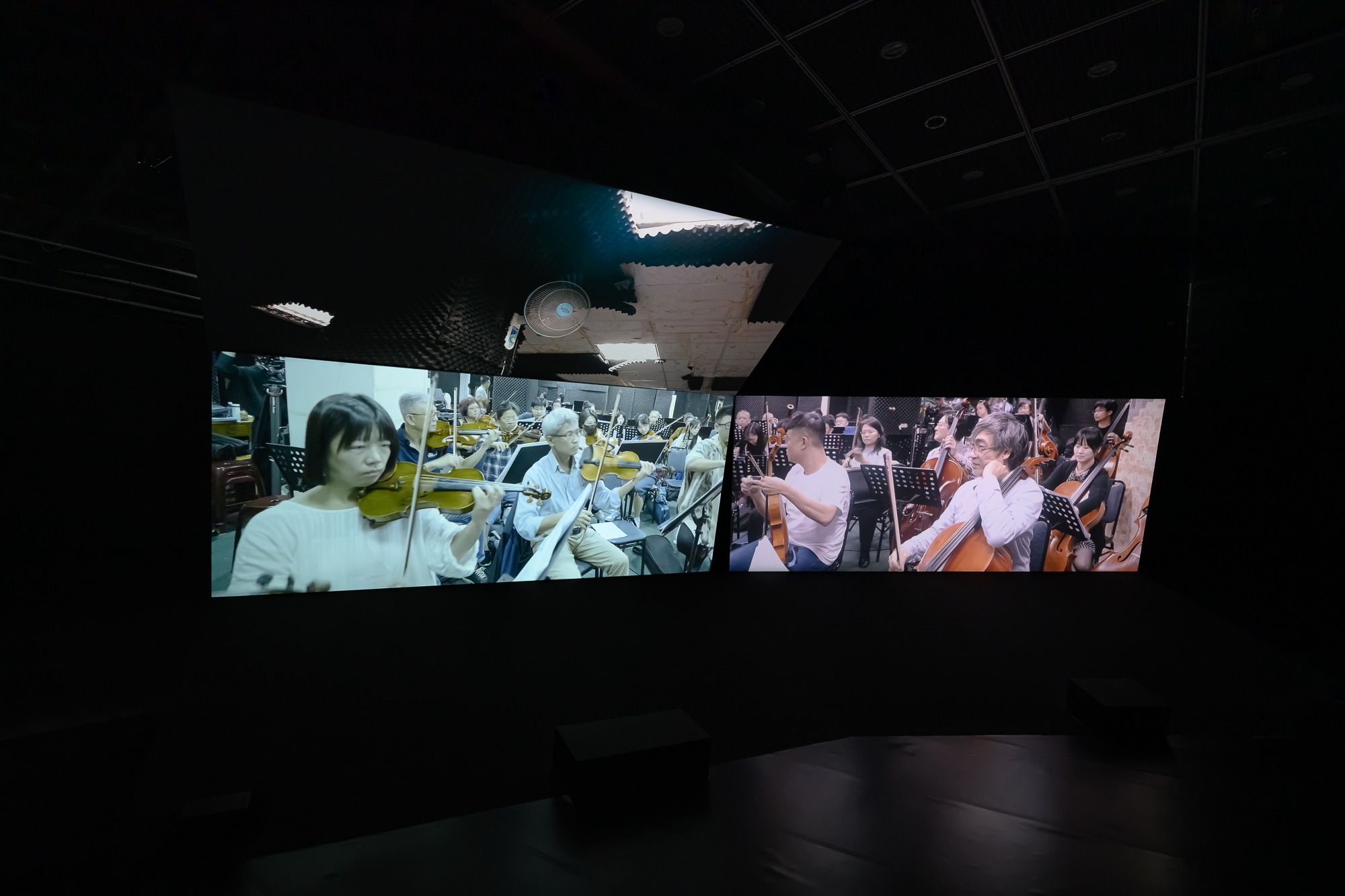
Chen Liang-Hsuan earned her MFA in Fine Arts from Taipei National University of the Arts in 2012 and a second MFA in Film, Video, New Media, and Animation from the School of the Art Institute of Chicago in 2016. Her work primarily crafts narratives through mixed-media installations featuring experimental moving images within specific spatial contexts. Working behind the camera, she combines elements such as multi-channel video, sound, and viewing perspectives, merging experimental documentary with home-video techniques to create a surreal environment that intertwines Taiwanese everyday life, personal memories, and dreams. Through her work, she invites viewers to step into this peculiar space, gaining insights into and challenging the man-made order that shapes our daily lives.
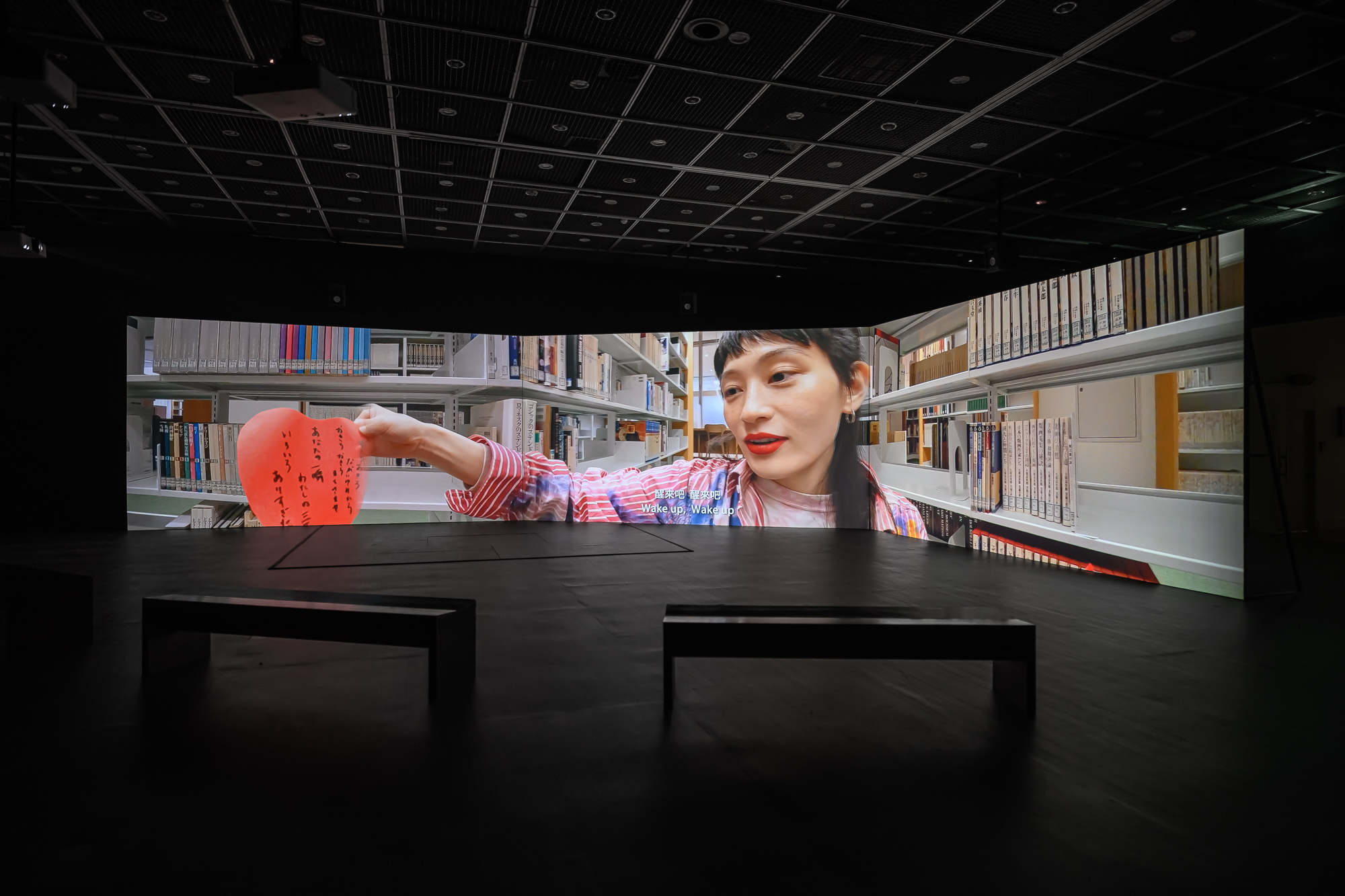
Featuring Takasu Sakie, Matsushita Tohru, and Nishihiro Taishi, SIDE CORE formed in 2012. Harimoto Kazunori also participates in the collective as a video director. SIDE CORE creates works based on the question of how an individual can go about sending messages in the city and public space, by referencing the ideas and history behind street culture. They sometimes collaborate with artists working in other genres to create a variety of works in the blind spots and intersections of the city.
Recent major exhibitions include The Secret Pass Exhibition: Passing, Creating, and Being Together—Circuits for Living (Arts Maebashi, Gunma, 2026), Under City (Richmond Art Gallery, BC, Canada, 2026), ARAFUDO ART AGAIN 2026: The Angel of History Carried on the Wind (Matsuya Store, Fukushima, 2026), Under City (WamonoArt, Hong Kong, 2026), CONNEXIONS: Artists as Bridges (Tottori Prefectural Museum of Art, Tottori, 2026), Shin Road (CCBT, Tokyo, 2026), Undo Planet (BACC, Bangkok, Thailand, 2026), SIDE CORE: Living road, Living space (21st Century Museum of Contemporary Art, Kanazawa, Ishikawa, 2025), 5th Anniversary Exhibition Plastic Utopia: Our New Ecosystem (Hirosaki Museum of Contemporary Art, Aomori, 2025), SIDE CORE | Concrete Planet (WATARI-UM and outdoor, Tokyo, 2024), Hyakunengo Art Festival (Chiba, 2024), the 8th Yokohama Triennale Wild Grass: Our Lives (Kanagawa, 2024)
Born in 1999 in Taipei, Taiwan, Li Ning-Jyun is currently pursuing a master’s degree at the School of Fine Arts of Taipei National University of the Arts. He works predominantly in mixed media and video installations, drawing inspiration largely from observations of everyday life and reflections while strolling. By rethinking the nature of everyday objects, he takes personal action to create new contexts, seeking to blur established pathways of perception and engage in dialogue with viewers’ past experiences.